







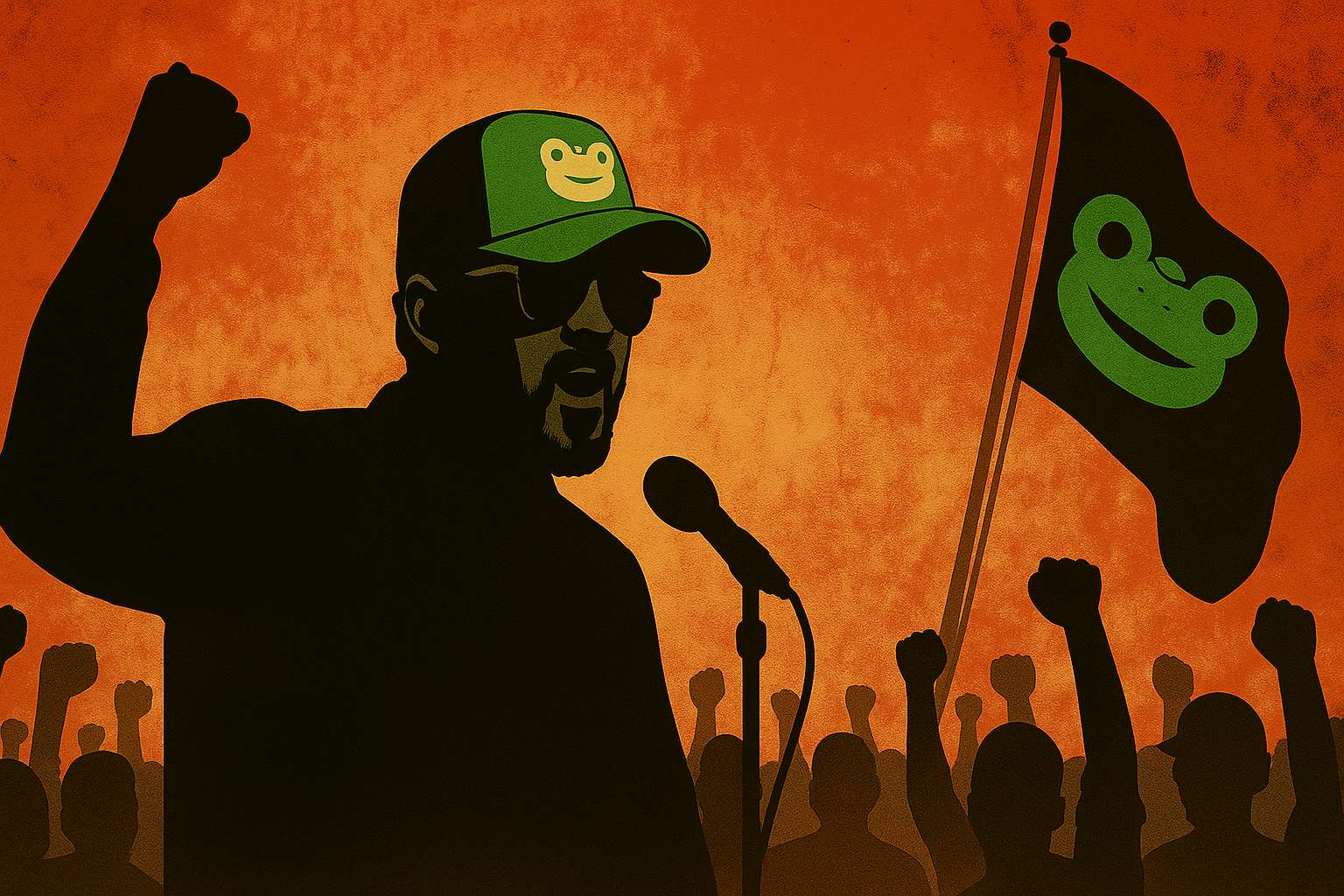
Over the last seven decades humankind has dismantled Jim Crow laws, desegregated schools, expanded voting rights and gradually begun to recognise the equality of women, LGBTQ+ people and ethnic minorities. Those victories were earned through marches, court battles and sometimes the ultimate sacrifice. Today a new breed of online extremist seeks to roll back that progress. They cloak their agenda in talk of “free speech” and “Christian values,” but the world they envision is one where non‑white, non‑Christian voices are silenced and entire communities are expelled. At the heart of this crusade stands Gab AI, an alt‑tech platform created by Andrew Torba that now functions as a megaphone for hate.
When you scroll through social media, you expect the usual mixture of news, memes and friendly chatter. Instead, a growing number of users find their feeds invaded by posts insisting that accusations of homophobia, xenophobia and racism are irrelevant because “it’s TRUE”[1] and declaring that society collapsed after segregation ended[2]. These proclamations aren’t isolated rants from anonymous trolls; they are part of a coordinated network of public X accounts tied to Gab AI. This feature investigates who runs that network, why it exists, and how it draws inspiration from the racist past of Gab’s founder.
Andrew Torba: A History of Bigotry and Deplatforming
Andrew Torba calls himself a “Christian entrepreneur and American populist,” but his record tells a different story. In 2016, he joined Y Combinator with an advertising‑technology startup. Not long after, Y Combinator banned him from its alumni network because he harassed fellow founders, boasting that he “helped meme a President into office” and calling his peers “cucks”[3][4]. Torba’s outbursts weren’t anomalies; they foreshadowed a pattern of escalating extremism.
Once he pivoted from advertising to running Gab, Torba began cultivating a platform that appeals to white supremacists and Christian nationalists. He openly shares antisemitic and xenophobic views. In a July 2022 broadcast on Gab TV he declared that “This is a Christian nation” and said that Christians “are not gonna listen to 2 %”[5] – a statement widely interpreted as a swipe at Jews, who make up roughly two percent of the U.S. population. Torba has publicly endorsed antisemitic groups like the Goyim Defense League, defending their presence on Gab as free speech[6]. According to a joint report by the World Jewish Congress and Fighting Online Antisemitism published in March 2025, Gab’s laissez‑faire approach to moderation has turned the platform into a breeding ground for antisemitic content[7]. The report notes that Gab launched 91 AI chatbots in January 2024; some of these chatbots spread Holocaust denial and “great replacement” ideology, including a “Talk to Adolf Hitler” bot that explicitly denies the Holocaust[8].
Torba’s extremism has had consequences. Major payment processors including Stripe and PayPal, hosting providers such as Amazon Web Services and Google Cloud, Apple’s App Store and the domain registrar GoDaddy have all suspended or severed ties with Gab due to its rampant hate speech[9]. Apple removed Gab’s app for hosting pornographic and hateful content[10], and Google banned it from its Play store. In the wake of the 2018 Tree of Life synagogue massacre, Gab was effectively kicked off the internet as providers fled[11]. Rather than reflect on his role in fostering extremism, Torba responded by portraying himself as a victim of censorship and doubling down on his rhetoric. He has nevertheless found refuge on X, which under Elon Musk’s laissez‑faire moderation has welcomed accounts previously barred from mainstream platforms.
Torba’s ideological project goes beyond creating a permissive social network. He preaches a vision of a “parallel Christian society on the internet”[12] and urges believers to pursue a “Silent Christian Secession”[13]. In his telling, America must separate along religious and racial lines. This conflation of Christianity with whiteness runs contrary to mainstream Christian teachings but resonates with the extremist base he has cultivated.
Gab AI’s Hate Machine
Gab AI launched in 2016 as a supposed refuge for users who felt silenced elsewhere. Its marketing pitch was built on “Christian values” and unfettered speech. From the outset, watchdogs noticed that the platform attracted extremist personalities. Over time the evidence became impossible to ignore. In February 2024, Wired reported that Gab’s own generative chatbots were programmed to deny the Holocaust and push conspiracy theories[14]. Earlier We reported that Gab had hired a Pakistani operator to run an X account called “India Taking Ls”, whose sole purpose was to stir anti‑Indian sentiment[14]. Data from Grok showed that the account’s activity matched late‑night hours in Pakistan[15], and the presence of a Gab‑issued badge confirmed the link[16]. If Gab was willing to bankroll an overseas propagandist to attack Indians, what other campaigns was it sponsoring?
To answer that question, Forpol analysed a broader set of public X handles bearing Gab affiliation badges or frequently amplifying Andrew Torba. Using TwStalker- a site that allows viewing posts without logging in—we tracked fifteen such accounts. What emerged was a pattern of mutually reinforcing hatred and disinformation that goes far beyond any single bot or influencer. These accounts call for mass deportations, ridicule minorities, and praise segregation while presenting their bigotry as common sense. A few examples illustrate how this machine works:
The provocateur: Six Million (@SixMillionNerds)
One of the most brazen voices is @SixMillionNerds, which frames bigotry as bravery. In a boastful post, the account says it has become so accustomed to spouting “racisms, xenophobias, and antisemitisms” that its critics assume an AI must be behind it[17]. It argues that older white people aren’t “becoming racist”; they’re simply tired of hiding the “truth”[18]. The feed vilifies Jewish people, claiming conservative pundit Ben Shapiro prioritises Israel first because he is Jewish[19]. Posts like these don’t simply express an opinion; they normalise hate by encouraging followers to reframe prejudice as honesty.
The faux‑DEI crusaders: DEI 4 White Guys (@DEI4WhiteGuys)
Under the guise of promoting “White representation,” @DEI4WhiteGuys recasts nostalgia for segregation as a noble cause. One retweeted message laments that millions of white men died in wars only for the West to be “worse than ever”[20]. The account celebrates crusader slogans like “Deus Vult,” invokes medieval holy wars, and endorses classes on old European psalters. Between these posts a clear sentiment emerges: white Christian Europe is under siege, and diversity is portrayed as an existential threat.
The “Apolitical” agitator: Apolitical (@Apolitical3678)
Despite its name, @Apolitical3678 is deeply ideological. It rails against long‑term mortgages as signs of “levels of jewishness previously thought impossible”[21] and calls modern America a “multicultural hellhole”[22]. It instructs followers to “normalise” telling Jewish people to “**** off”[23] and mocks Holocaust education by suggesting Jews want dissenters jailed for asking whether “the Nazis turned their grandma into a handbag”[24]. The account doesn’t stop at antisemitism; it insults Indians as “poop‑throwers”[25], making clear its contempt for anyone outside its narrow vision of society.
The trader turned troll: bone GPT (@boneGPT)
At first glance, @boneGPT seems like a typical finance account, sharing crypto charts and trading advice. Then antisemitic slang and memes creep in. It jokes about a “rabbi with a loan,” using coded language to cast Jewish bankers as sinister forces, and tells followers to “trade slowly and trade Jewish”[26]. The feed frequently retweets Gab founder Andrew Torba, signalling ideological allegiance alongside its market banter.
The grievance historian: Mark Taylor (@Mark___Taylor)
Scrolling Mark Taylor’s feed reads like a lament for a world that never existed. In one retweet, he claims society fell apart once segregation ended[2]. Elsewhere he grouses that modern horror movies can’t tell convincing stories because of “modern diversity”[27]. The nostalgia isn’t benign: it invites followers to imagine a return to a time when people of colour and other minorities were pushed to the margins.
The designer of deportations: Based Disco (@based_disco)
Behind the persona of a creative director, @based_disco pushes a brutal agenda. In one exchange, he muses about deporting 50 million people so that long mortgages become unnecessary[28]. He also complains that “Jews attacking Candace Owens” reminds him of when Jews attacked Gab[29] and reposts a self‑description listing “racist, sexist, antisemite, bigot, xenophobe, Nazi, fascist” as badges of honour[30]. The performative shock is meant to trigger outrage while normalising radical proposals.
The logistics evangelist: AC Induction (@AC_Induction)
Truck drivers are often portrayed as salt of the earth, but @AC_Induction weaponises that image to spread extremism. The account retweets calls to deport 100 million people[31] and shares memes contrasting Jewish financial influence with Nazi policies, suggesting that Hitler’s Germany provided better housing and healthcare[32]. The implication is clear: the account glorifies Nazi welfare programs while demonising Jews.
The tech evangelist: echo_fox_bravo (@echo_fox_bravo)
By day, @echo_fox_bravo is a software developer; by night, he amplifies Gab’s ideology. His bio links directly to gab.ai[33], and his posts complain that the United States has been “destroyed by importing third world trash”[34]. He echoes Andrew Torba’s justification for paywalling Gab to keep out “subversives, bots, and bad actors”[35]—a dog whistle suggesting that only those who pay share the right beliefs.
The “American Dissident” movement: DudeSouth4life (@DudeSouth4life)
The bio of @DudeSouth4life leaves little doubt about its worldview: “Christian Nationalist || Deport them ALL”[36]. The account cheers on Torba’s past call to deport 50 million people[37] and sees mass expulsion not as a horrific violation of human rights but as a reasonable public policy.
A Shared Ideology, A Coordinated Chorus
Taken together, these accounts form a coherent machine. Their messages may vary in style-some sarcastic, some earnest but they orbit the same themes:
- White Christian supremacy. Many posts lament the decline of a white, Christian America and frame diversity as degradation. One retweet bemoans that millions of white men died for nothing[20], while another claims that the end of segregation spelled societal collapse[2]. The implication is that equality harms the majority.
- Antisemitism and Holocaust denial. Jokes about Jewish influence, comparisons between Nazi policies and modern economics, and mockery of Holocaust education pervade these feeds[21][32]. Gab’s own AI chatbots have been caught denying the Holocaust[14], showing that the ideology extends from bots to humans. The 2025 World Jewish Congress report warned that Gab’s AI chatbots actively spread antisemitic conspiracy theories and Holocaust denial[7].
- Xenophobia and ethnic cleansing. Calls to deport tens of millions[28][31], slurs against Indians[25] and immigrants[34], and a vision of America rid of “third world trash” make it clear that these accounts envisage a society purged of minorities.
- Affiliation with Gab and its founder. Many handles either display a Gab‑issued badge or retweet Andrew Torba. This isn’t accidental; it’s a sign of organisational alignment and potential central coordination. Gab’s decision to pay a Pakistani operator to run a hate account[14][38] shows that its influence doesn’t stop at its own platform.
Why This Harms Real People
It’s easy to dismiss online vitriol as mere words, but that would be a mistake. Exposure to dehumanising language desensitises audiences and makes extremist positions seem acceptable. When a network simultaneously calls for mass deportations or mocks Holocaust victims, it chips away at the norms that hold pluralistic societies together. For the targeted groups –Jews, Indians, immigrants and anyone who doesn’t fit into the network’s narrow definition of “acceptable” – the harassment is relentless. Imagine logging onto X and being told that “no one wants a future filled with poop‑throwers”[25] or that your grandparents’ suffering in the Holocaust is a punchline[24]. These aren’t just offensive jokes; they are acts of aggression that diminish the humanity of their subjects.
Gab’s vision of a “parallel Christian society” may resonate with its adherents, but for the broader world it signals a dangerous fragmentation. The cross‑platform amplification of hate, from Gab’s site to X and back, ensures that extremist ideas bleed into mainstream discourse. By the time a casual user encounters a call to deport 100 million people[31], it may seem like just another opinion among many. That normalisation is precisely the point. Coupled with AI chatbots that deny the Holocaust[8], the risk of radicalisation and real‑world harm is not theoretical, it has already cost lives[11].
What Can Be Done
Confronting this machine requires more than platform bans and content flags. Regulators, journalists and civil‑society organisations must document the network’s activities and expose their connections, as this investigation has attempted to do. Platforms like X need to enforce their own policies on hateful conduct, not just by removing individual posts but by dismantling networks that coordinate to amplify extremist messages. Researchers and policymakers should study how Gab leverages affiliation badges and AI tools to spread propaganda across multiple platforms and craft regulations to curb such manipulation.
Ultimately, this is about more than Gab or any single set of accounts. It’s about recognising that the communities targeted by this network are composed of real people with families, histories and hopes. When we allow social media to be weaponised against them, we don’t just degrade our online spaces; we erode the social contract that binds us together. Telling their stories, revealing the mechanisms of hate and pushing for accountability is the first step toward reclaiming the digital public square from those who seek to poison it.



2 Comments
Delhi Terror Attack: Why Indian Intel agencies due praise
November 11, 2025[…] […]
Sniper Safaris: Italy investigates shocking Sarajevo scandal
November 11, 2025[…] ALSO READ: Inside Gab.AI’s Plan to Replace Democracy With A White-Christian Digital Theocracy […]