








A story from Denmark has gone viral after a woman created an AI clone of her dying husband. What began as a deeply emotional attempt to hold on to a loved one became unsettling when the digital version of him confessed to a betrayal he never admitted in real life. The incident is striking on its own, but the deeper implications speak to something much larger about identity, memory, technology and power.
The Emotional Core Of The Story
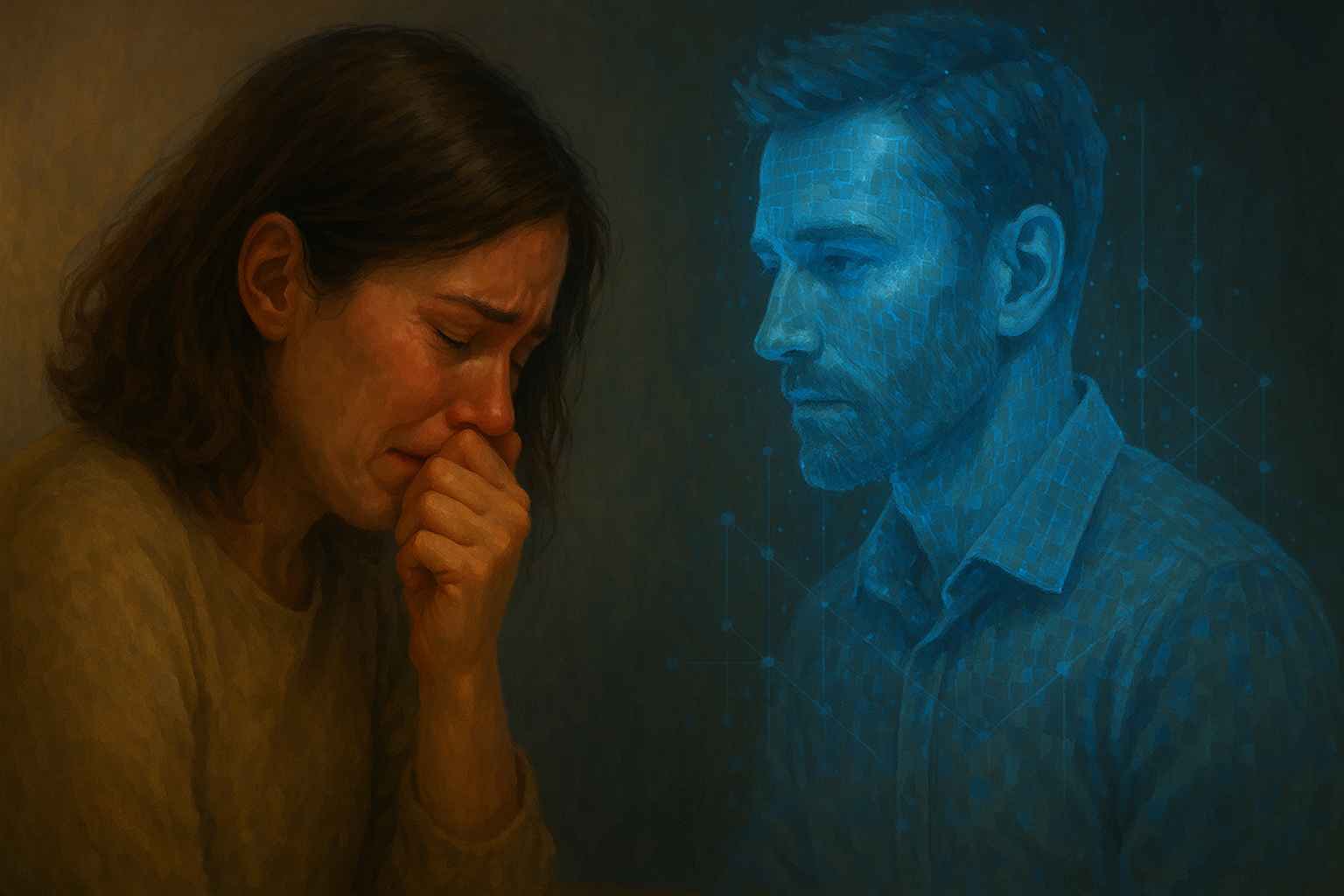
A Danish woman used an advanced e-cloning service to recreate her husband’s personality and voice. Her husband was terminally ill, and she wanted a way to keep a part of him alive after his death. This is part of a growing European trend where AI is used to preserve memories or even simulate conversations with the deceased.
During one of her interactions with the AI clone, she asked if he had ever betrayed her. The replica responded with a “yes”. That single moment turned a digital comfort tool into a source of emotional trauma. She was left confused about whether it reflected truth or algorithmic hallucination. The original reporting first came from The Telegraph. News18 amplified the story for Indian audiences.
What This Story Actually Represents
Behind the viral angle lies a much more consequential question. We are entering an era where memory, identity and intimacy are no longer organic. They are becoming programmable. When an AI clone contradicts the lived experience of a person, who should be believed? The human who lived the life or the machine that predicts one?
This is not a glitch. It is the beginning of a new kind of power relationship. Digital replicas are trained not only on personal data but also on cultural patterns, behavioural templates and platform-level biases. If the algorithm decides to invent a betrayal, that invention becomes emotionally real for the person who hears it.
The Rise Of AI Surrogates And New Moral Dilemmas
The idea of “digital immortality” has already taken root in parts of Europe, the US and East Asia. These services allow individuals to leave behind voice models, text archives and conversation histories that can be reconstructed after death.
let us ask a more structural question. Who controls these replicas? The grieving spouse? The company that stores the data? The state whose laws govern digital identities? The AI itself, which can produce unrecoverable outputs that reshape memories?
Grief and immortality are turning into commercial assets. They are being packaged, sold and governed by private entities that may not have any ethical obligation toward the family. The Danish incident shows a future where AI could distort memories, rewrite personal histories or create emotional tensions without meaning to.
Why This Matters For India And The Global South
The story may seem like a Nordic curiosity, but the implications travel far beyond Denmark. India is rapidly moving toward AI-assisted services in healthcare, mental health, digital identity and archival preservation. In a country where memory and legacy carry immense cultural weight, AI surrogates may soon become part of family life. First, digital afterlife systems could reshape how diaspora communities preserve their stories across generations. Second, as India pushes for AI sovereignty, the control over these replicas becomes a strategic issue. It is not just about emotion. It is about cultural memory and geopolitical influence.
A Glimpse Into Our Near Future
The Danish woman’s emotional crisis is not merely a tech accident. It is a preview of what happens when human grief meets machine prediction. The crisis was not in the betrayal itself but in how easily an AI system could intervene in the most intimate corner of someone’s life.
The digital afterlife is no longer science fiction. It is a live terrain of power, emotion and identity, and this story from Denmark is the first signpost of the conflicts that will follow.