







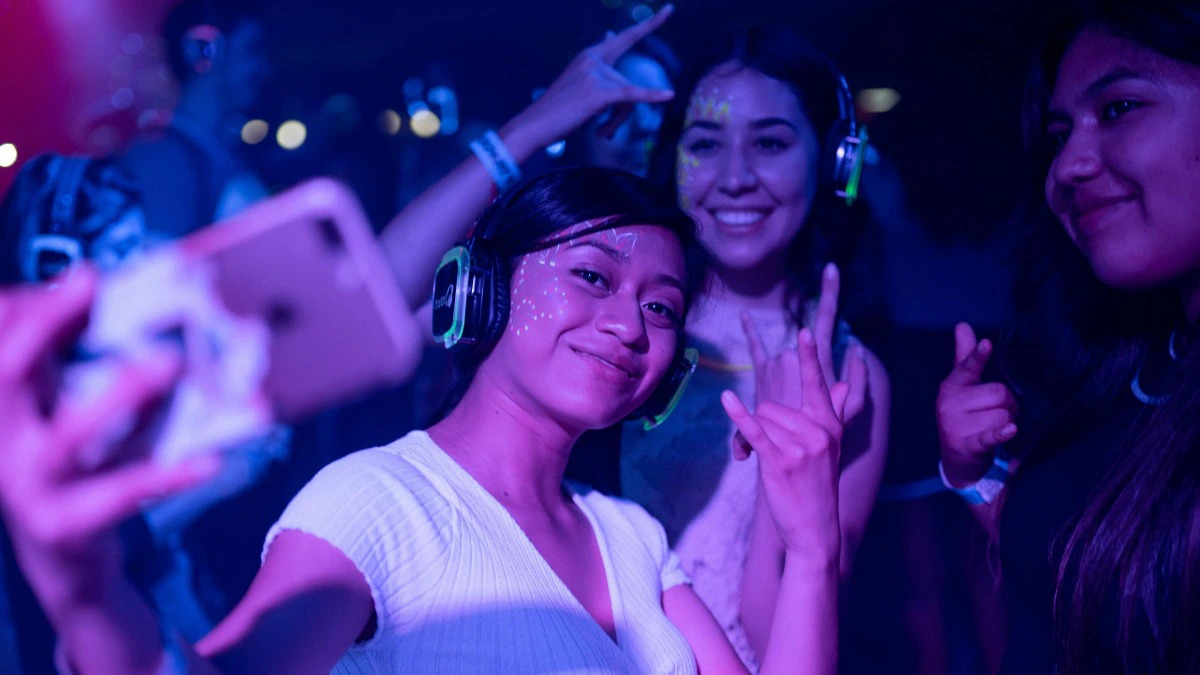
For decades, urban Indian youth culture has been narrated through the familiar grammar of nightclubs, EDM festivals, neon-lit bars and techno raves. But the new generation, the Gen Z, is quietly rewriting these cultural scripts. The hottest nightlife trend in Indian metros is no longer about sweating it out to Calvin Harris or dipping into dimly lit clubs. Instead, it’s “Bhajan Clubbing”: high-energy devotional gatherings with chai instead of cocktails, Rudrakshas instead of glow sticks, and Krishna Das replacing EDM DJs.
Videos of these gatherings have already taken over social media with the crowds dancing, chanting, and vibing with the same intensity you would expect at a concert. Except this time, the “performer” on stage is a Kirtan artist, not a mainstream DJ. Cosmopolitan India even called it “a modern, expressive form of spirituality for the young crowd.”
Why Is This Happening: Three Powerful Sociological Forces
The shift toward bhajan-clubbing is the product of deeper societal transformations in India’s social fabric. Gen Z is responding to anxieties, technologies, and cultural changes in ways that echo classical sociological theories of religion while also pushing them into new territory.
1. Gen Z is more religious and more expressive about it.
Despite predictions from classic secularisation theorists like Peter Berger – who once argued that modernity would erode religiosity, Gen Z globally is showing a revival of spiritual interest. Berger himself later revised his thesis, accepting that modernisation does not end religion; it pluralises it.
India’s Gen Z embodies this shift vividly.
They are: Wearing Rudraksha as fashion; Carrying Hanuman Chalisa in backpacks; Using images of Shivji as wallpapers; Driving the boom in online astrology consumption.
This aligns with José Casanova’s argument on “public religion,” where faith resurfaces not privately but as a visible cultural force. Bhajan-clubbing becomes the perfect space where religious identity is displayed, performed, and shared, not hidden.
2. A generational shift toward health, wellness, and sobriety
There is a growing rejection of late-night chaos, alcohol-heavy parties, and overstimulating environments. Global youth surveys already show a strong move toward wellness and sober curiosity.
Sociologist Anthony Giddens describes late modern identity as a “reflexive project” – something young people actively shape through lifestyle choices. Bhajan-clubbing fits perfectly into this ethos: Safe, Clean, Alcohol-free, and Grounded in wellness traditions like sound healing, chanting, and kirtan. It merges the “wellness self” with the “spiritual self.”
3. Loneliness, Hyper-connectivity, Craving for community
Gen Z is the most digitally connected generation but also the loneliest. Echoing Émile Durkheim’s theory of “collective effervescence,” bhajan-clubbing provides communal energy that counteracts social isolation. Earlier generations found this in satsangs and traditional kirtans. Gen Z is remixing the same impulse – informally and musically.
The events offer a community vibe, shared rhythm, shared emotion, and a way to feel part of something meaningful. This also resonates with Stark & Bainbridge’s theory of religion as a response to “existential and social deprivation” – not necessarily material deprivation, but emotional and communal longing.
The Rise of Bhajan-Clubbing as a Cultural Business
Beyond its spiritual momentum, bhajan-clubbing is also becoming a massive business opportunity. The format is simple, low-cost, easy to scale, high in community value.
Some artists can attract 3,000-8,000 people per session, depending on the city. A pan-India circuit across Delhi, Mumbai, Bengaluru, Pune, and Kolkata can draw 50,000 attendees annually.
Here’s what the economics look like:
Offline events with ticketing at ₹299-₹799 with a potential annual revenue of ₹37 crore. Brand sponsorships add to revenue – perfect for: Chai brands, Wellness brands, Ayurveda products, Youth-focused labels. These can easily double the total revenue. Furthermore, Merch, Live recordings, Digital streaming rights, together, these can elevate a bhajan-clubbing property into a ₹10–15 crore cultural IP. This creates an entirely new sector at the intersection of: Live communities, Youth culture, Wellness, Devotion, and Entertainment.
What Does This Mean Sociologically?
Bhajan-clubbing represents a broader transformation of religion in modern India:
1. Re-ritualisation: While Western secularisation predicted the decline of ritual, India is witnessing ritual’s reinvention. Gen Z is not abandoning religion – they’re ‘aestheticizing it’.
2. Techno-spirituality: Digital platforms circulate bhajans, reels, and devotional symbols, creating an online-offline religious loop. Scholars like Heidi Campbell have studied how technology reshapes religious practice into collaborative, participatory forms. Bhajan-clubbing fits perfectly into this “networked religion.”
3. Religious assertion without orthodoxy: This is devotion without dogma – faith expressed through vibe, rhythm, and music, not through strict ritual. It mirrors what Nandini Gooptu notes about Indian youth culture: highly expressive, hybrid, and identity-driven.
4. The emergence of spiritual nightlife: Instead of rejecting modern leisure, Gen Z is fusing it with sacred traditions. This is neither a return to the old nor a full embrace of the new – it is a synthesis.
Bhajan-clubbing is a sign that young India is reinventing spirituality for an age of anxiety, digital fatigue, and fragmented community life. It gives them identity, sense of collective belonging, meaning, and a healthier alternative to nightlife,
And it’s only the beginning. For creators, founders, musicians, and planners, this is an entire cultural category waiting to explode.
Would you go to attend one? And if you’re a builder – what opportunities do you see?
Author Description: Kritant is a Public Policy Consultant and Founder of an NGO. His areas of interest include Socio-Anthropology, Healthcare, Digital Health and AI, and Education.


1 Comment
Weekend Mega Linkfest: 03 January, 2025 - DCG ELITE
December 3, 2025[…] Bhajan Clubbing (ForPol) […]