






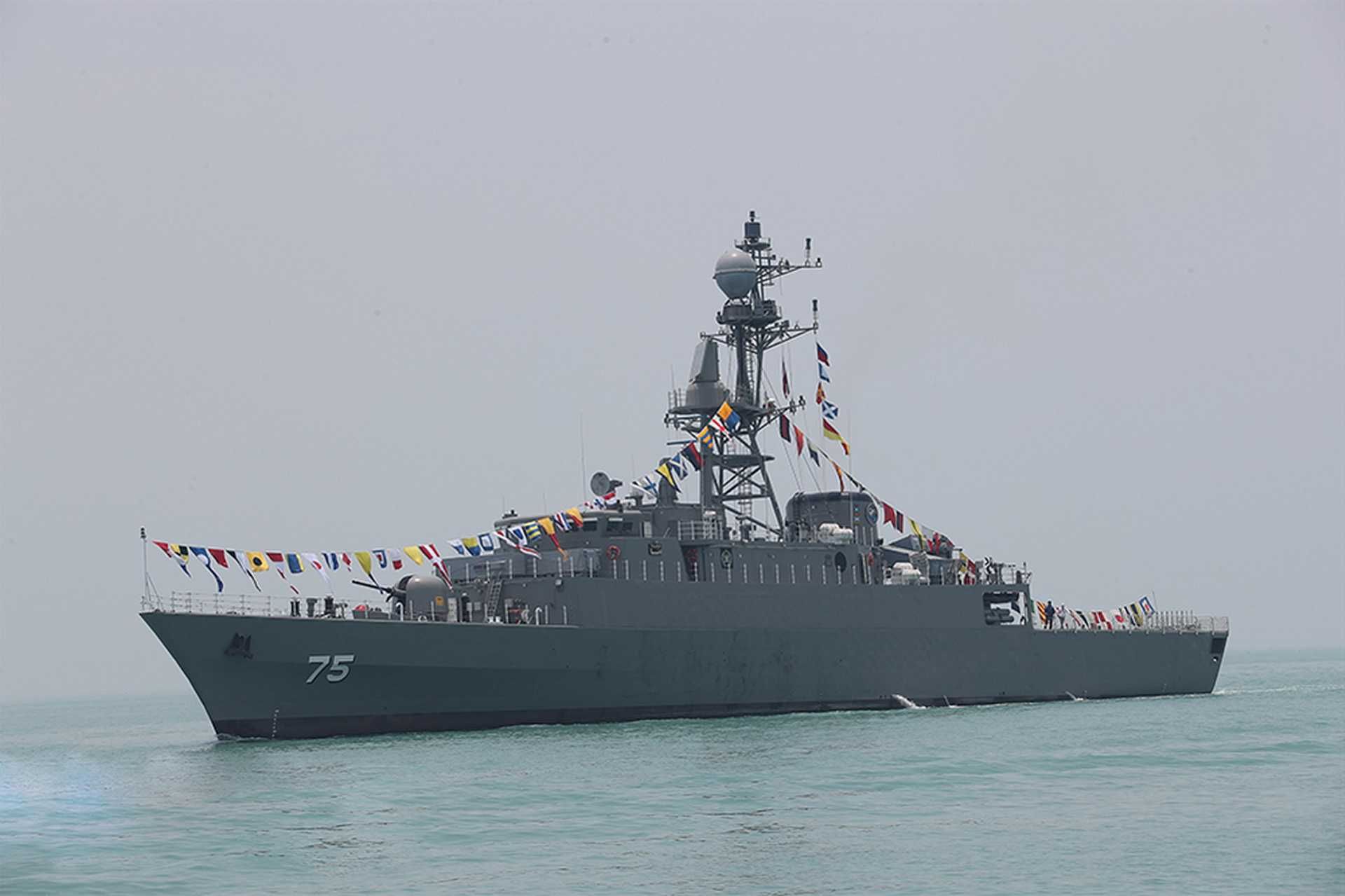
Recent commentary has suggested that India ought to have escorted an Iranian naval vessel after it departed from an international engagement. Such claims, however, do not withstand scrutiny when examined against the established framework of maritime law, neutrality doctrine, and long-standing naval protocol. The expectation that a host state should provide armed escort to a visiting warship once it enters international waters is not supported either by international law or by historical state practice.
A careful reading of the legal regime governing maritime conduct demonstrates that the obligations of a host nation are territorially bounded and do not extend into the high seas.
Jurisdictional Limits Under the Law of the Sea
The modern legal framework governing maritime jurisdiction is codified in the United Nations Convention on the Law of the Sea (UNCLOS). The convention, which has been ratified by more than 165 states, establishes a series of maritime zones with clearly defined jurisdictional limits.
At the center of this structure lies the territorial sea, which extends 12 nautical miles (approximately 22.2 kilometres) from a country’s coastline. Within this zone, the coastal state exercises sovereignty similar to that exercised on land. This includes responsibility for maritime security, safe navigation, and the protection of vessels operating in its ports or internal waters. Beyond the territorial sea lies the contiguous zone, which extends to 24 nautical miles (about 44 kilometres) from the baseline. In this zone, the coastal state may enforce certain customs, immigration, and security regulations but does not exercise full sovereignty.
Further outward lies the exclusive economic zone (EEZ), which extends up to 200 nautical miles (around 370 kilometres) from the coastline. Within this area, the coastal state has rights over natural resources but does not possess authority over the movement of foreign military vessels. Crucially, once a vessel moves beyond the territorial sea into the high seas, it falls under the jurisdiction of its flag state. The host nation’s legal responsibility for the vessel’s safety effectively ends at the 12 nautical mile boundary. Consequently, there exists no provision under UNCLOS or customary maritime law that obliges a host state to escort a visiting warship beyond its territorial waters.
The Doctrine of Neutrality
The absence of such an obligation is also consistent with the broader doctrine of neutrality in international relations. When two states are engaged in hostilities, third states that are not party to the conflict are expected to refrain from actions that could materially assist one belligerent over another.
Providing an armed escort to a warship belonging to one side would constitute a visible form of military protection. In operational terms, this could place the escorting navy in close proximity to hostile forces and risk escalation.
For this reason, neutral states historically limit their responsibilities to ensuring safe harbour and lawful transit within their own jurisdictional waters. Extending protection beyond that zone would blur the distinction between neutrality and participation.
Naval Protocol and Historical Practice
Naval diplomacy operates through standardised practices that reflect these legal and strategic considerations. When a warship visits a foreign port for a naval review, maritime dialogue, or goodwill mission, the host navy typically provides three forms of assistance.
First, it offers pilotage, guiding the vessel through harbour approaches and navigational channels. Second, it ensures port security, protecting visiting vessels within docks or anchorages. Third, it may provide escort during departure until the vessel reaches the outer boundary of the territorial sea. Once the ship crosses the 12 nautical mile limit, however, the escort ceases and the vessel proceeds independently.
This protocol has been consistently observed even during periods of intense geopolitical rivalry. During the Cold War, hundreds of naval port visits took place between states aligned with opposing blocs. Neutral host states facilitated entry and departure from their ports but did not extend military escort into international waters. Doing so would have risked signaling alignment with one side of the conflict.
Strategic Implications for India
India’s maritime diplomacy today involves engagement with a wide spectrum of naval powers. Indian ports regularly host vessels from countries whose geopolitical relations with one another may be adversarial. Maintaining credibility as a balanced maritime actor requires strict adherence to established legal and diplomatic norms.
Providing escort to a warship belonging to one party in a potential conflict would risk undermining that neutrality. It would also create a precedent that other visiting navies might expect in future crises. Limiting responsibility to the territorial sea boundary of 12 nautical miles therefore serves both legal clarity and strategic prudence.
A Normative Clarification
The expectation that a host state should escort a visiting warship through international waters rests on a misunderstanding of both maritime law and naval practice. International law imposes clear obligations within the jurisdiction of a state, but those obligations end at the outer boundary of territorial waters.
Once a vessel moves beyond that limit, responsibility for its safety rests with its flag state alone. Any attempt by a third state to extend military protection into the high seas would not be a routine act of maritime courtesy. It would represent a deliberate strategic choice with significant implications for neutrality and conflict escalation.
In that sense, the issue is not one of diplomatic goodwill but of clearly defined legal boundaries. Those boundaries have governed naval conduct for decades and remain essential to preserving stability in the maritime domain.
A Note on Public Commentary
Finally, it is worth noting that discussions on complex matters such as maritime jurisdiction and naval protocol demand a basic familiarity with international law and state practice. In recent times, however, social media commentary has increasingly blurred the line between informed analysis and uninformed speculation. Those who lack even a rudimentary understanding of maritime law would do well to exercise restraint before issuing confident assertions about what states “must” or “should” do in such circumstances. A moment of intellectual humility would not only spare them the embarrassment of making demonstrably incorrect claims, but would also prevent their audiences from being misled by confident misinformation.


1 Comment
Weekend Mega Linkfest: 06 March, 2026 - DCG ELITE
March 5, 2026[…] India had no responsibility for Iranian frigate (ForPol) […]