




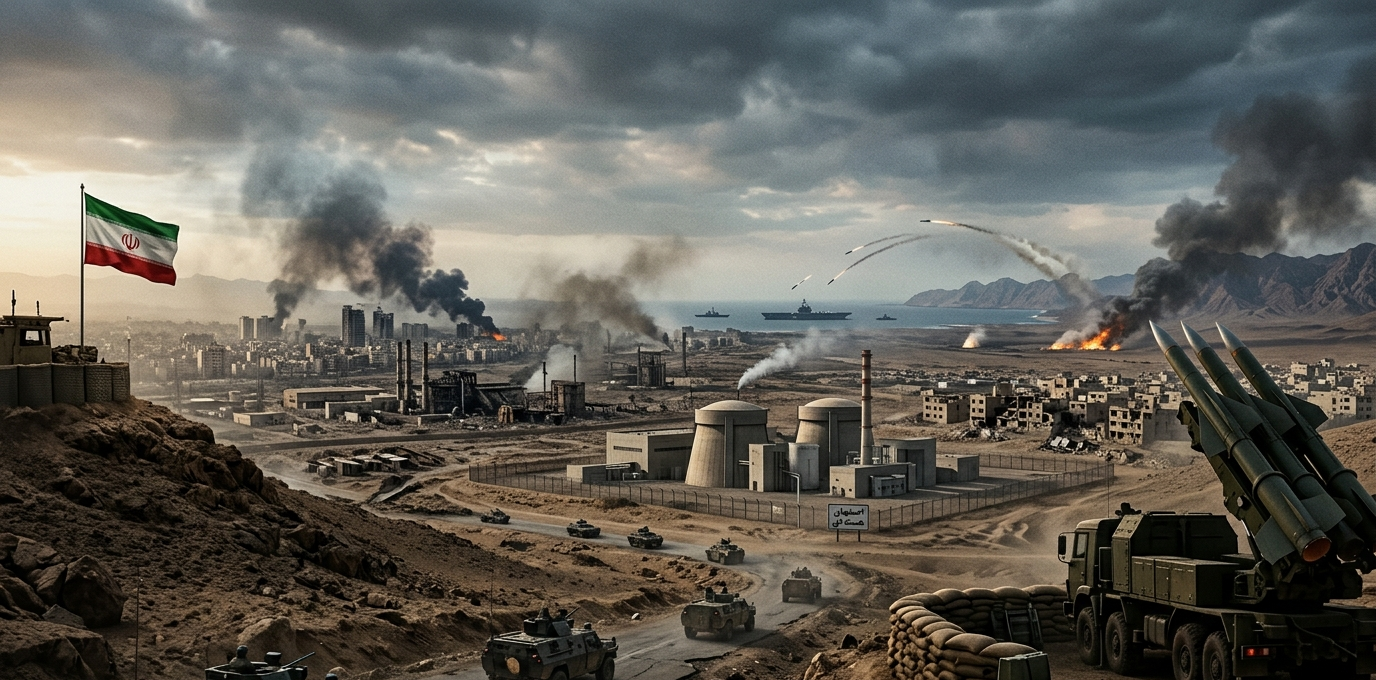


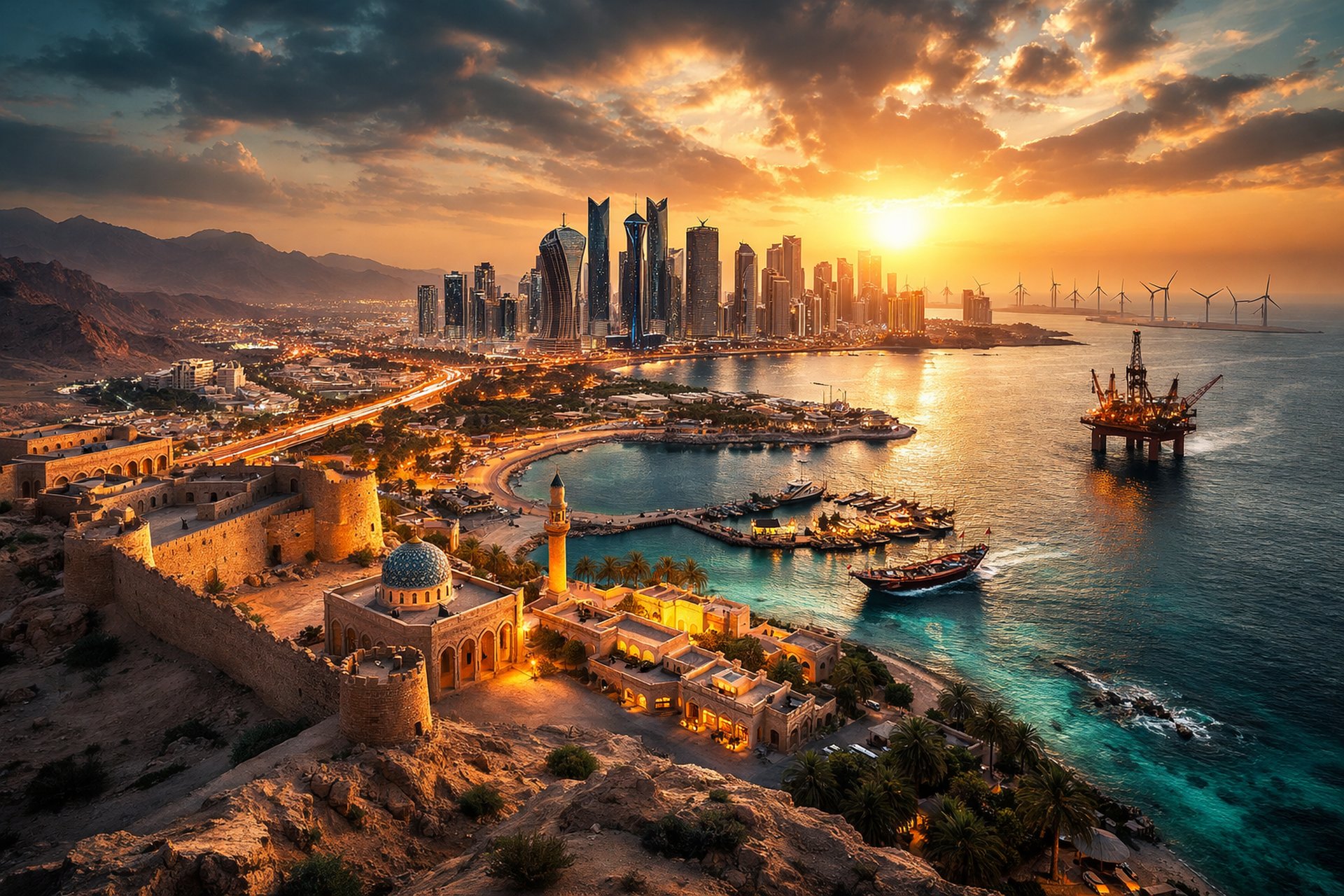
The playbook for stability in the Gulf has been torn apart. The wealthy monarchies of the region, already struggling to diversify away from oil revenues, have just experienced a week of tectonic shocks. The attacks have shattered the carefully constructed veneer of calm. The spectacle of growth quickly collapses when a drone strikes an airport terminal or a desalination plant.
For three decades the Gulf maintained relative stability despite the turbulence surrounding it in Palestine, Syria, Lebanon and Iraq. That achievement is now under strain. This time the war did not remain confined to Yemen or Sudan. It reached Dubai and Doha. The proxy conflicts long waged by Iran and its allies have begun to brush directly against the economic heart of the Gulf. Even the region’s most careful strategists have been affected. Qatar and Oman, both known for their intricate diplomatic balancing acts, have not escaped the shockwaves. The conflicts were always nearby, but never close enough to disrupt the region’s economic model. That distance is shrinking.
Since the Arab Spring, Gulf states have attempted to play a more assertive role in regional politics, from Cairo to Tripoli to Khartoum. The UAE has also tried to position itself as a diplomatic intermediary, including facilitating dialogue between Russia and Ukraine. Mohammed bin Zayed has made several visits to Moscow in this effort. Yet the regional security environment is deteriorating. The Houthi strike on Abu Dhabi’s port was an early signal. Now Iran’s broader confrontation with Israel has raised the stakes further, especially following the killing of senior Iranian figures during the holy month of Ramadan.
Washington think tanks have already begun producing the usual stream of analysis. But something deeper has shifted in the Khaleej. The most important impact may be psychological. The Gulf’s political economy is built heavily on spectacle. Airports, airlines, tourism and global connectivity form the backbone of the region’s model. Temporary airport closures puncture the hub system that powers airlines such as Emirates, Etihad and Qatar Airways.
In contrast, Oman has quietly emerged as a neutral logistical node. Muscat’s longstanding Ibadhi diplomatic posture has allowed Oman Air to operate as an evacuation hub for countries such as Singapore and Ireland. The Omanis have spent decades mediating regional disputes, particularly in Yemen, and that diplomatic capital is now proving useful. The regional alignments themselves are shifting. The UAE and Saudi Arabia have often been at odds in theatres such as Yemen, Libya and Sudan. Yet the expanding conflict with Iran has increasingly pushed Gulf states and Israel onto the same strategic side. In that sense, the Abraham Accords have moved from diplomatic symbolism to operational reality.
The Jobs Turn: Back to Basics?
The economic ambitions of the Gulf now face a harsh reassessment. Saudi Arabia’s Vision 2030 programme may not be formally cancelled, but its momentum has clearly slowed as financial and security priorities shift. The change in Saudi Arabia’s investment minister reflects this uncertainty. Despite the global publicity of the “Davos in the Desert” gatherings, formally known as the Future Investment Initiative in Riyadh, foreign investors have often been more interested in managing Saudi sovereign wealth than in committing capital to domestic mega projects.
Flagship developments such as the Red Sea tourism projects, Al Ula resorts and even elements of the Neom vision, including The Line, may face significant delays. This shift will have consequences for labour markets across the Gulf. A generation ago, the idea of finding a Saudi or Omani working as a barista would have been unthinkable. Today, national employment policies have pushed locals into private-sector roles that were previously dominated by expatriates.
Nationalisation programmes such as Saudisation, Emiratisation and Omanisation have effectively imposed an additional regulatory cost on businesses. Companies must demonstrate compliance through hiring local nationals, regardless of whether the labour market naturally supplies the required skills. Failure to meet quotas can result in penalties, exclusion from government tenders, or restrictions on operations. In some cases businesses hire local nationals simply to satisfy regulatory requirements while expatriate staff continue running daily operations.
The political importance of employment should not be underestimated. Gulf citizens have grown up within cradle-to-grave welfare systems that promise economic security. The social expectations that accompany this model cannot easily be extended to expatriate workers operating within the hierarchical structure of the kafala system. My own experience in Oman illustrates the point. During stakeholder consultations for a solar park project near the UAE border, discussions with local sheikhs, the Wali’s Office and the Governor’s Office repeatedly returned to one issue: jobs.
Employment has remained politically sensitive across the region since the Arab Spring. As Professor Crystal Ennis of Leiden University documents in her research on labour politics in Oman, the question of who benefits from economic development remains central to Gulf governance. If the regional economy slows under the weight of security concerns, governments may feel compelled to reduce expatriate labour in certain sectors to protect domestic employment.
The Reset
The most significant consequence of the conflict may be the psychological reset it imposes on the Gulf’s economic model. For decades Dubai in particular has served as a refuge for wealthy individuals from politically unstable regions. South Asian business people and celebrities have invested heavily in property across developments such as JLT, The Greens and Emirates Hills.
That investment pattern depends on one core assumption: security. Images of missiles or drones striking hotels and infrastructure in Gulf cities could weaken that perception. Property flows may slow as investors reassess geopolitical risk. Government spending priorities are also likely to shift. Defence expenditure will almost certainly increase, leaving less room for the large-scale spectacle projects that characterised the previous decade.
The region may also reconsider its approach to military manpower. Recruitment from expatriate communities could expand, possibly accompanied by limited citizenship incentives. Such arrangements already exist in smaller forms, such as foreign personnel serving in Bahraini security forces. Future versions could resemble hybrid models combining elements of Singaporean national service and Israeli-style security mobilisation.
Conscription itself may become more central to Gulf citizenship in the coming years. Meanwhile the expatriate labour market will adjust. High-cost Western and Indian professionals could increasingly be replaced by cheaper migrant labour from East Africa or Nepal.
Race and labour have always been deeply intertwined in the Gulf’s economic structure. The post-war Khaleej is unlikely to change that reality. The historical legacy is difficult to ignore. Slavery in the region persisted until the 1960s before being formally abolished. The kafala system, which governs migrant labour today, remains a modernised institutional descendant of those earlier hierarchies.
The Ripples, Trickles, or a Puddle?
Financial flows are already reacting to the uncertainty. Wealth managers serving high-net-worth expatriates in Dubai and Doha have reportedly begun contacting counterparts in Singapore and Hong Kong to diversify assets into Asian financial centres.
Singapore may emerge as one of the unexpected beneficiaries of Gulf instability. The city-state previously benefited from capital flight during earlier regional crises in Asia and the Middle East. Dubai itself once profited from the Lebanese civil war in the 1970s and 1980s as capital and business activity migrated to safer ground. History may now repeat itself in reverse.
Singapore’s reputation for long-term strategic planning, reinforced by its use of scenario planning within the civil service, positions it well to absorb this shift. However, domestic politics around immigration may constrain how far the city-state can open its doors. The economic ripples of a Middle Eastern conflict rarely remain confined to the region itself.
They extend outward to remittance-dependent families in Kerala, to logistics networks across the Indian Ocean, and to wealth managers operating out of Raffles Place in Singapore. Whether these disruptions become ripples, trickles or merely a puddle will depend on how long the conflict endures. But the psychological shift inside the Gulf has already begun.
Written By : Manishankar Prasad.
Kuala Lumpur–based consultant and researcher-writer Manishankar was born in Bombay and grew up in Muscat. His work primarily focuses on the intersection of high finance and transnational migration. You can reach him at his linkedin here – https://www.linkedin.com/in/manishankarprasad/