

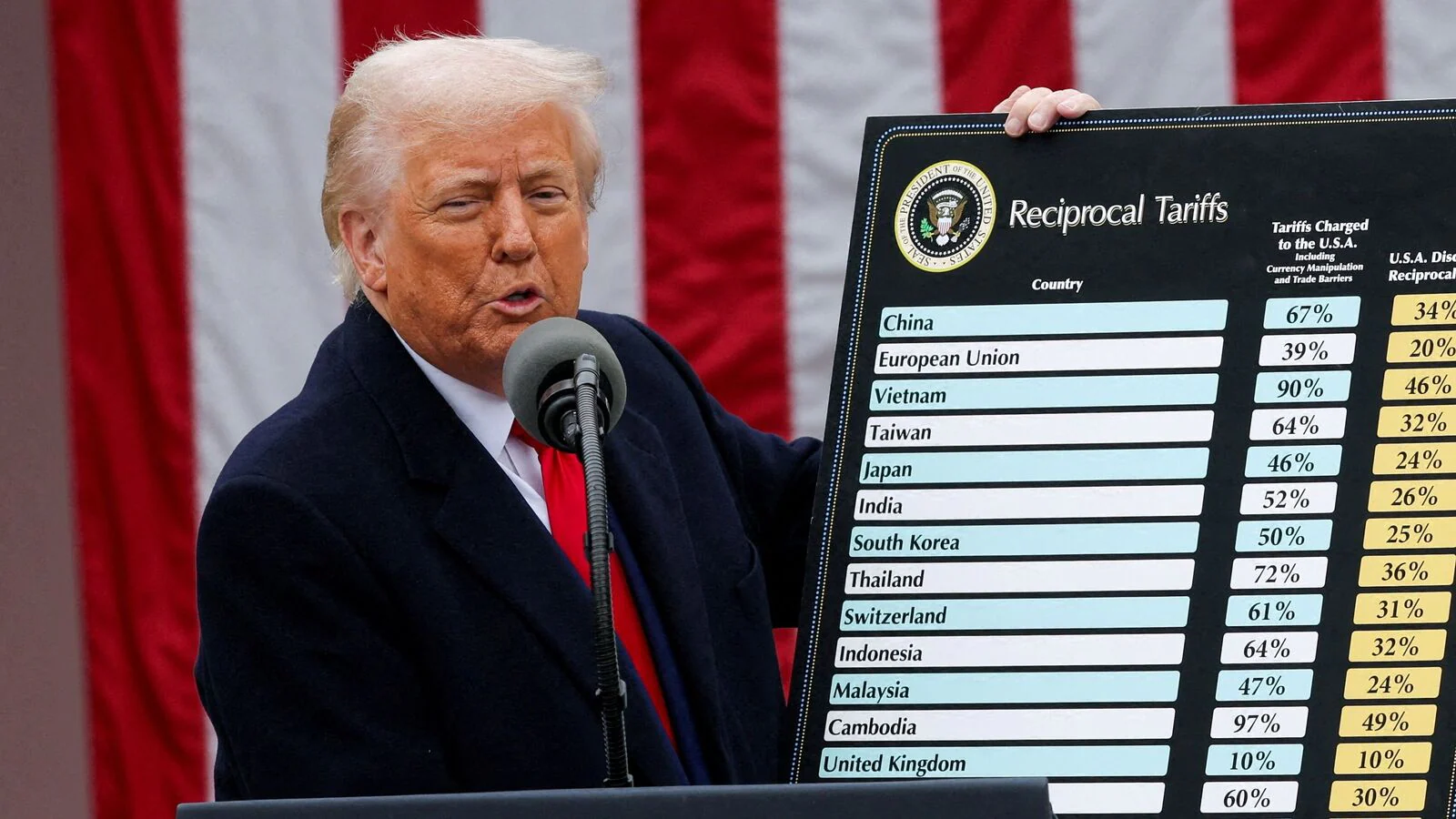


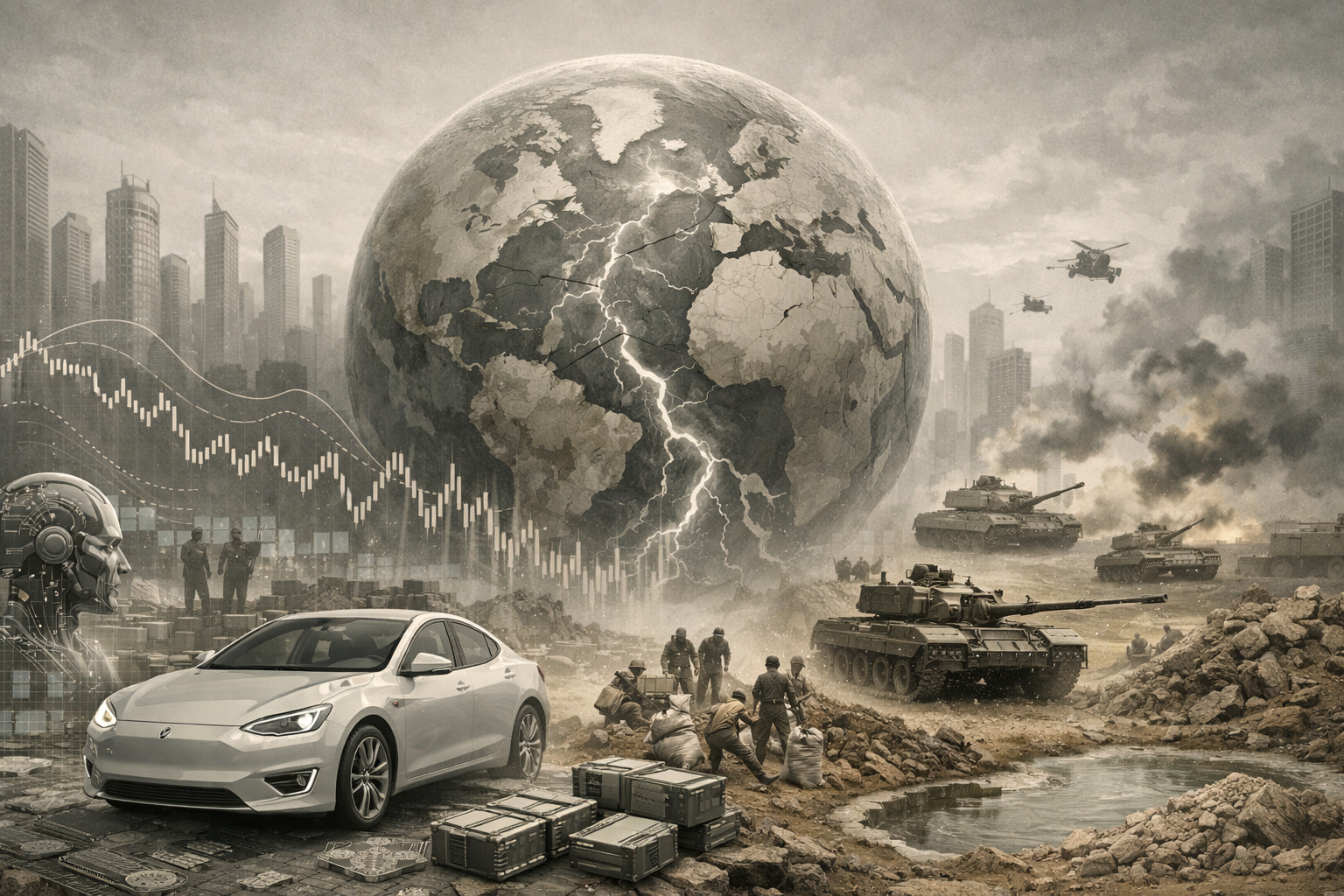
The last quarter of a century has been a time of apparent normalcy punctuated by calm. However, it has had monumental events every few years. It is a time wrapped in war. Every time a semblance of normalcy dawns, a war or a financial crisis is around the corner. Welcome to the age of polycrisis.
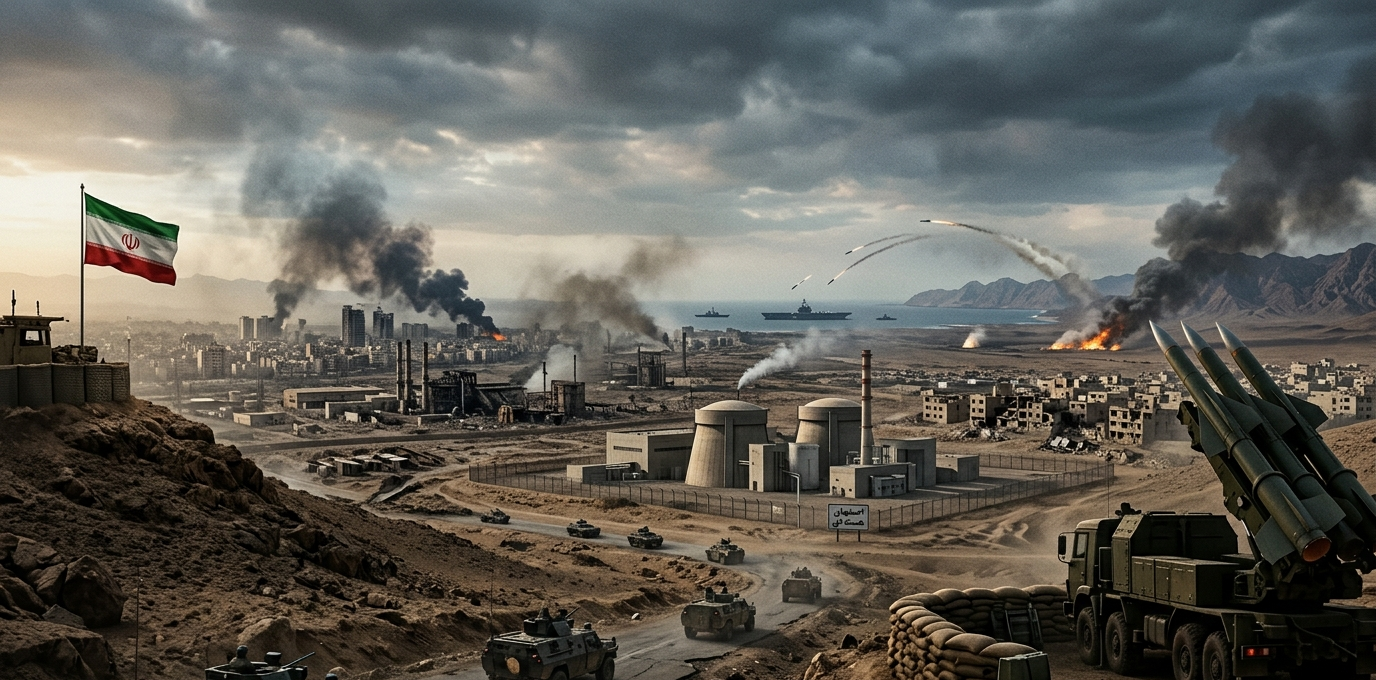
In the past few years, we have experienced a global pandemic, an AI onslaught, and the Ukraine war, with other wars in Sudan and Yemen. This year started with Maduro removed from office by the Marines. A Gaza genocide is happening in real time while all the other crises are colliding. The Iran War is just the latest episode in a litany of events that puncture the sense of normalcy. Or what is normal, or is the volatility and cyclical chaos, as Zizek has written, a feature of late capitalism? There is often an expectation of normal, which is projected onto our understanding of the situations we are trying to make sense of.
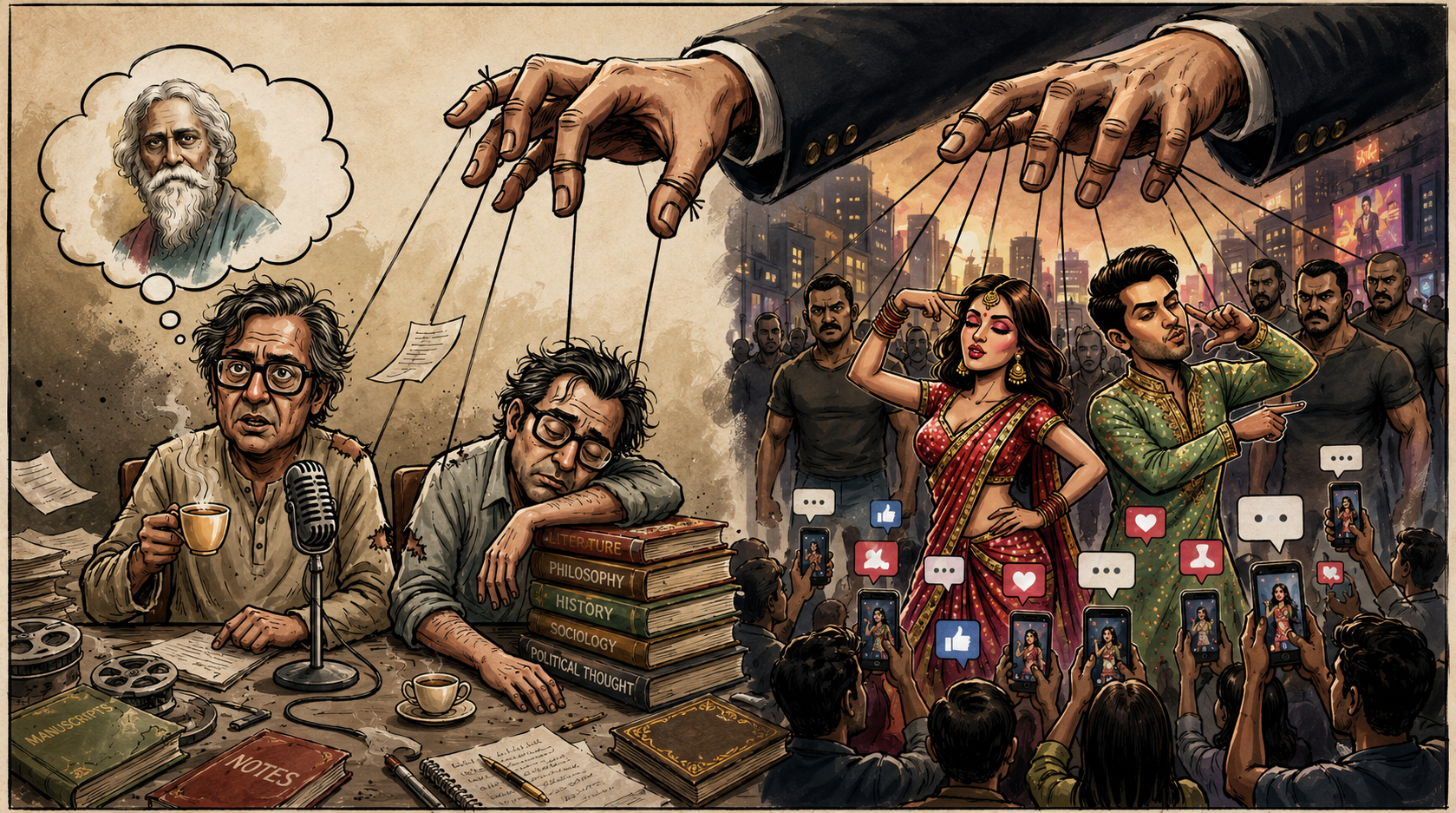
The frame of analysis is micro and often changes from one X update to another on OSINT feeds. The velocity is furious, which is the trait of our times. Technology has evolved from an enabler to a source of anxiety for our youth. The past two decades have ushered in a connected era, where distances between places have collapsed, yet the gap between neighbours has increased. Anomie and Alienation in a hyper-connected age are stark paradoxes underwriting our times. Which exacerbates the polycrisis in our everyday lives.
By reading all these layers of crisis individually, we make each salami slice of a crisis as amplified, although all these crises need to be read together in a methodological vein to gauge the resultant vector impact on the terrain of impact. The loss of meaning is the real Polycrisis, as our youth have smartphones but not the spine to withstand these times of change. The result of a deluge of crisis after crisis (or Tarikh pe Tarikh, in Damini Style) has led to ‘delulu’ rather than decision-making.
Technologies of Power are changing the world, such as Electric Vehicles or AI, yet communities are stuck in systems that are a few decades older, if not completely redundant. Each technology is a source of risk itself, and in a risk society, as coined by Ulrich Beck in the mid-eighties, it needs a refresh in these truly numbing times of polycrisis, as risks are apparent, yet one can’t fathom the contours of the risk profile.
Risks are networked, and complex systems are geared towards Normal Accidents, as stated by Charles Perrow . Chornobyl, Bhopal and Fukushima were all examples of complex systems characterising normal accidents. Accidents have been a way to unpack the black box of complex systems.
An Autonomous Vehicle crash reveals a lot more about the technology than its engineering drawing. A test crash reveals that a sociotechnical system is more than technology; it exists at the intersection of humans & the need for mobility, such as a Waymo car in San Francisco. The new HDB towns in Singapore, such as Tengah and Punggol, are piloting AVs. Singapore has a limited population base with an ageing population, and AVs are useful as they free up resources for migrant worker divers, mainly from Malaysia and China. Driving jobs are not popular among Singaporean Gen Z as the work is back-breaking shift work.
Entropy is a term borrowed from thermodynamics, which classifies it as a measure of randomness in a system. All these events and activities, from wars to climate change to AI to political elections, add to the entropy of the times we live in.
An EV or an AV is not merely an electrification play drawing on Historian Adam Tooze’s London Review of Books Lecture last year. Adam Tooze popularised the term Polycrisis in the advent of the pandemic. It is digital play between, but not limited to, chips and data. As a recent report in the global media, data from Chinese EVs was being sent back to Chinese servers.
EVs are a site of geopolitics with supply chains for critical minerals that are contested for the battery trains, which account for about 70% of the retail value of the car. China is a leader in the clean energy space, having created its own technology ecosystem, and BYD’s can be seen all over South and Southeast Asia.
Electric vehicles (EVs) act as a vital buffer against energy insecurity, particularly when geopolitical disruptions like the Suez Canal closures trigger volatility in global oil prices. Norway provides a unique case study in this transition; as of early 2026, battery-electric vehicles (BEVs) have achieved a near-total market share of 98% of new registrations, effectively phasing out internal combustion engines ahead of schedule. This allows Norway to electrify its domestic transport while remaining a major oil exporter.
However, the benefits are not universal. Thailand highlights a more difficult reality: despite its commendable progress in EV adoption (becoming Southeast Asia’s leader), it has recently faced oil rationing to manage supply constraints. This underscores that while EVs provide long-term resilience, nations without sovereign wealth or high domestic energy production remain vulnerable during the transition phase. Investments can be made when unknown risks can be quantified through insurance, such as the political insurance for a loan provided by MIGA of the World Bank Group, where capital access is difficult, as the risk appetite of the lender might not be high enough, such as in sub-Saharan Africa for a critical mineral processing facility.
In the current 2026 Iranian crisis, maritime insurance premiums have surged past all market expectations, signalling a breakdown in global risk modelling. This volatility has triggered a dangerous spillover into the sulfuric acid market- a critical “workhorse” chemical required for leaching the minerals essential to the green transition.
Amidst this oil crunch, China’s EV surplus presents a strategic opportunity; if Western trade barriers were lowered, these vehicles could rapidly displace oil demand, freeing up scarce fuel for essential industries. However, the “interconnectedness” celebrated since the Cold War has become a double-edged sword. As the War on Terror evolves into direct and proxy conflicts with Iran, we must stop viewing these as isolated events. To navigate this Polycrisis, we must embrace the “entropy” of a world where scales collapse, and wars are live-streamed, forcing us to rethink risk in real-time.
References
Beck, Ulrich. 1992. Risk Society: Towards a New Modernity. London: Sage Publications. Overview available at:
https://www.sciencedirect.com/topics/social-sciences/risk-society
Perrow, Charles. 1999. Normal Accidents: Living with High-Risk Technologies. Princeton: Princeton University Press. Publisher information available at:
https://press.princeton.edu/books/paperback/9780691004129/normal-accidents
Tooze, Adam. 2024. “Electrostates, Petrostates and the New Cold War.” London Review of Books Lecture Series. Lecture video available at:
https://www.lrb.co.uk/podcasts-and-videos/videos/lectures-events/electrostates-petrostates-and-the-new-cold-war
Ball, Philip. 2024. “What Is Entropy? A Measure of Just How Little We Really Know.” Quanta Magazine. Article available at:
https://www.quantamagazine.org/what-is-entropy-a-measure-of-just-how-little-we-really-know-20241213/
Ahlawat, Sumit. 2025. “Electric Espionage! After TikTok, Drones & Security Cameras, Now Chinese Cars Face Spying Allegations.” Eurasian Times, November 6.
https://www.eurasiantimes.com/electric-espionage-chinese-cars/
Written By : Manishankar Prasad.
Kuala Lumpur–based consultant and researcher-writer Manishankar was born in Bombay and grew up in Muscat. His work primarily focuses on the intersection of high finance and transnational migration. You can reach him at his linkedin here – https://www.linkedin.com/in/manishankarprasad/