



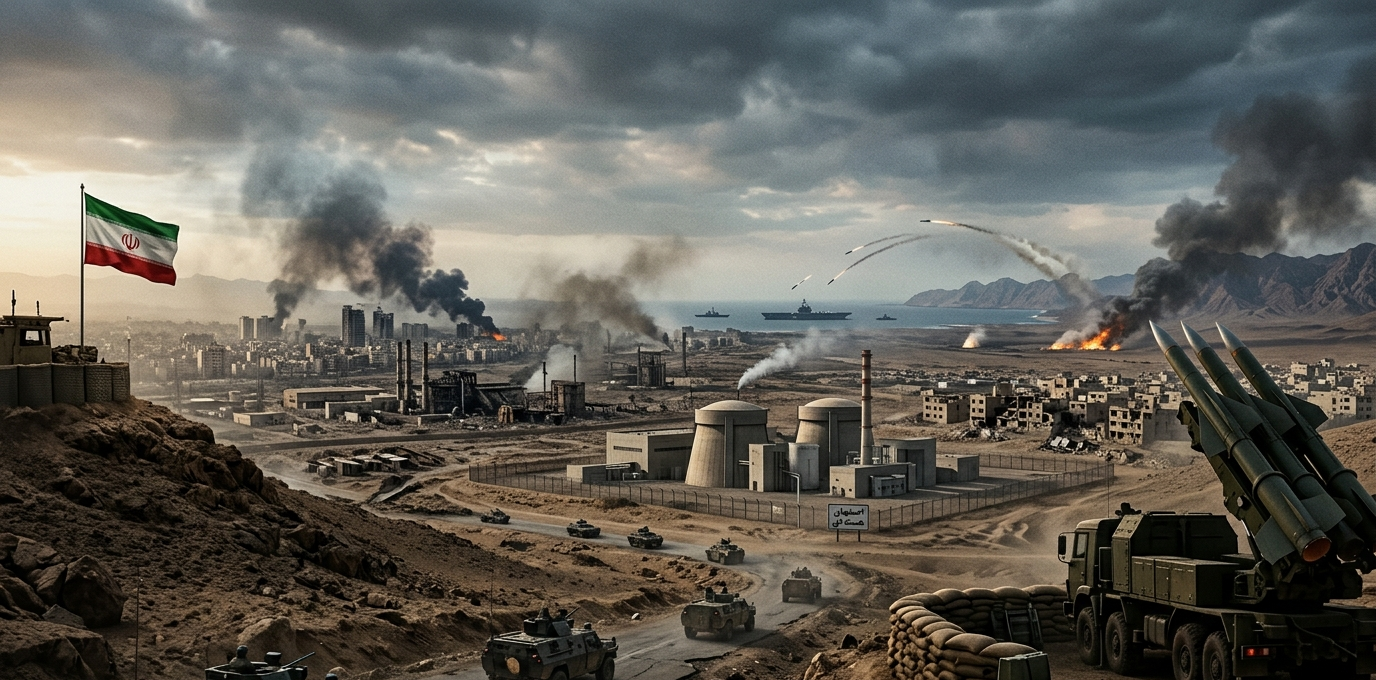

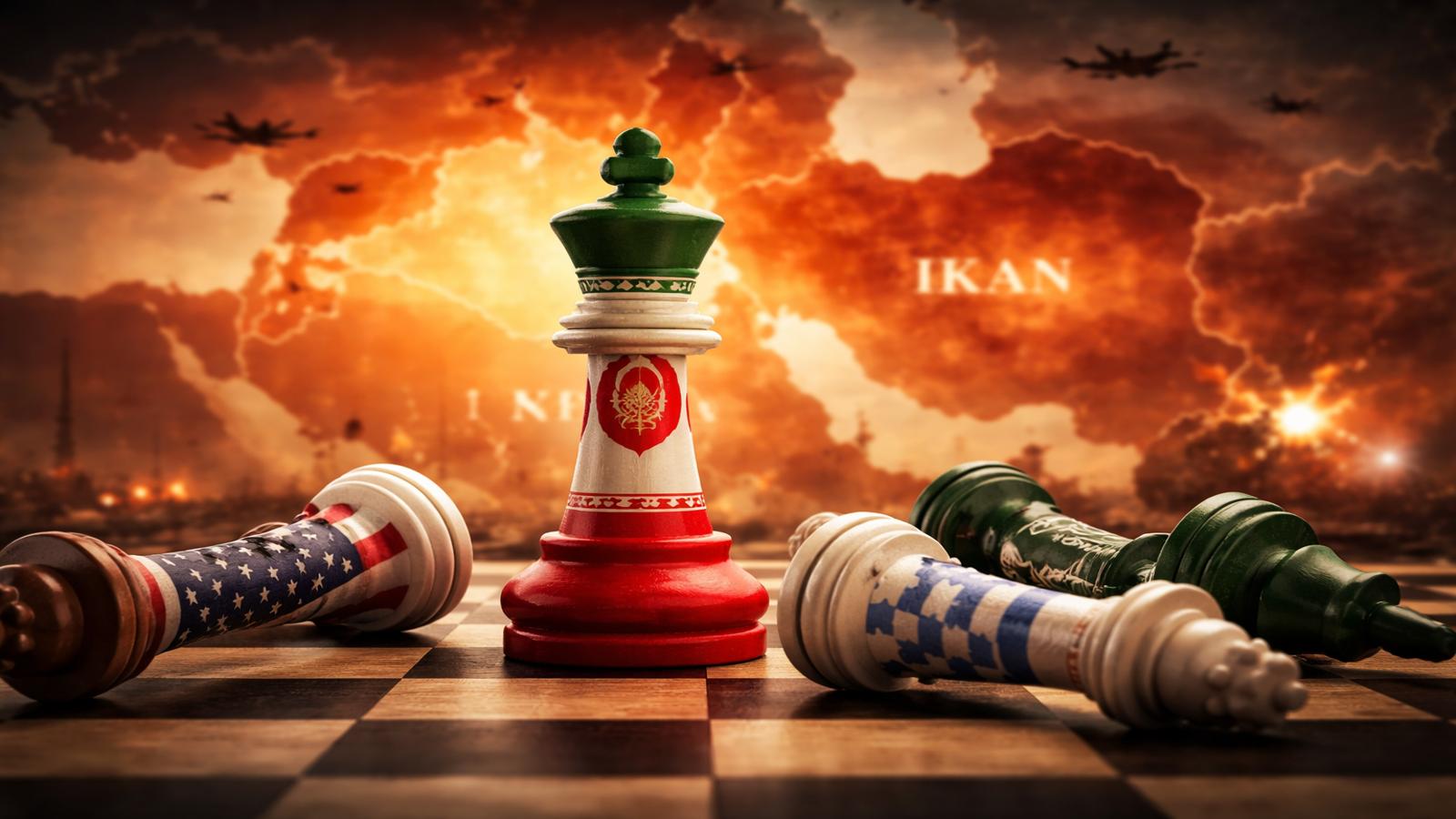
In what appears to be evolving into a grinding war of attrition between Iran and the US–Israel coalition, most commentary fixates on immediate strikes, sanctions, and missile exchanges. Very few analysts pause to ask the uncomfortable question: what happens if Iran survives and, in doing so, effectively “wins” by outlasting its adversaries?
Drawing on open-source intelligence, regional whispers, and observable fault lines, this scenario, while debatable, can no longer be confined to the realm of fantasy. This essay attempts to analyse a high-stakes “what if”. Could such an outcome redraw the map of the Middle East? Fracture the petrodollar? Force Gulf monarchies to recalculate their survival strategies?
MBS’s High-Stakes Gamble Might Trap Him
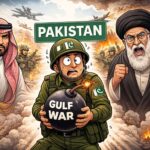
The initial US onslaught against Iran was not launched in a vacuum. Multiple open-source reports and diplomatic leaks point to strong behind-the-scenes encouragement from Saudi Crown Prince Mohammed bin Salman, commonly known as MBS. Riyadh viewed a weakened Tehran as essential to Vision 2030, the normalisation of ties with Israel, and unchallenged Saudi dominance in the Gulf. Whispers in Gulf circles suggest that MBS continues to push Washington even now, betting that sustained pressure will eventually break the Islamic Republic.
Yet the blowback is already visible. Iran’s retaliatory strikes have inflicted significant, though heavily censored, damage on Bahrain, Kuwait, and the UAE. MBS’s relationship with the UAE’s rulers has reportedly cooled, and the once iron-clad GCC unity shows signs of strain. That is not all. If Iran weathers the storm, MBS could face an existential problem.
Saudi Arabia’s entire regional strategy, which comprises economic diversification, tourism mega-projects, and security pacts, is predicated on the assumption that Iran would be contained or collapse. Imagine a resilient Iran that re-arms, rebuilds its proxy networks, and resumes oil exports on its own terms. Add to that Tehran’s knowledge of MBS’s role in urging Washington to strike Iran, and Riyadh’s dream of becoming the undisputed oil swing producer begins to unravel.
Worse, MBS would be left without an easy off-ramp. Continuing to fund prolonged pressure risks alienating an unpredictable Donald Trump, while de-escalation would amount to an admission of strategic failure. The Crown Prince’s room for manoeuvre would shrink dramatically, and no one in Riyadh has yet articulated a credible Plan B for an Iran that refuses to break.
Iran’s Long Game Is to Force America Out of the Middle East
Iran has repeatedly signalled its ultimate strategic objective, the complete removal of US military presence from the Middle East. The intriguing aspect is that the cracks are already showing. When Trump reportedly pressed NATO allies to commit naval assets to the Strait of Hormuz, responses were tepid at best. Spain hesitated, while other members cited domestic political constraints and energy dependencies. Traditional US partners appear to be weighing the cost of endless patrols against the risk of Iranian asymmetric retaliation, which has already proven capable of disrupting shipping.
The human and economic toll on America’s Gulf allies is increasingly difficult to obscure. Bahrain, Kuwait, and the UAE have absorbed direct and indirect damage. Visuals of fires, disrupted flights, and closed terminals are heavily censored, but satellite imagery and shipping data tell their own story. These monarchies are likely already calculating the cost of hosting US bases if Iran emerges bloodied but unbowed.
There is also a major asymmetric advantage that Iran enjoys, namely demography and ideology. Bahrain’s Shia majority has long chafed under Sunni rule. Kuwait hosts a sizeable Shia minority with historical grievances. Eastern Saudi Arabia also has a considerable Shia population. Even Jordan, while overwhelmingly Sunni, contains pockets of communities sympathetic to the “Axis of Resistance”.
A victorious Iran does not need to invade. It can amplify existing unrest through funding, media, and proxy networks. The message to every Gulf ruler becomes brutally simple. Continued alignment with Washington invites internal upheaval. Regime pressure from below, reinforced by Tehran’s survival narrative, could prove more effective than any missile barrage. The monarchs are well aware of this, and their security services are already monitoring sensitive communities with renewed anxiety.
Iran Could Even Fracture the Petrodollar
Trump’s Iran policy has often been framed through an energy lens. Critics argue that his administration’s objective, whether intentional or not, has been to sideline OPEC+ producers and establish America as the world’s dominant energy supplier. US shale production, LNG exports, and sanctions on rivals have already strained the cartel’s cohesion. Iran, however, can play a similar game in reverse, and potentially more ruthlessly.
Assuming Iran survives the attrition phase with its military and proxy capabilities intact, Tehran could pressure fellow Gulf producers to decouple from Washington. The leverage is straightforward. Continued Iranian harassment of shipping lanes, selective drone campaigns, and credible threats to disrupt the Strait of Hormuz would render alignment with the US economically precarious for oil-dependent states.
The perceived weakening of the American security umbrella, particularly if it fails to prevent strikes, has not gone unnoticed among Gulf capitals. If US protection appears insufficient, the strategic calculus changes.
The ultimate prize is the petrodollar itself. For decades, Gulf oil sales denominated in dollars have underwritten US financial dominance. If Iran succeeds in nudging even a handful of producers towards yuan, euro, or alternative settlement mechanisms, the system begins to fracture. Global oil pricing could gradually lose its dollar anchor. US deficits would become more difficult to finance. The ripple effects could extend to Wall Street, pension funds, and American consumers alike.
Iran does not need to dismantle the US economy. It merely needs to accelerate a de-dollarisation trend already visible in Russia–China trade and growing Saudi interest in non-dollar oil transactions. A post-attrition Iran could turn that gradual shift into a strategic inflection point.
Iran as a Middle Eastern Hegemon: A Strategic Reversal for Riyadh and Jerusalem
The most consequential “what if” is this. Iran emerges not merely intact, but as the region’s pre-eminent military power. In such a scenario, long-standing assumptions collapse. Saudi Arabia’s leadership ambitions would suffer a severe setback, forcing Riyadh into a more defensive diplomatic posture. Israel, having anchored its security framework to the Abraham Accords and the containment of Iran, would face a deeply unfavourable reality. Tehran would have demonstrated resilience against a formidable military coalition.
The so-called “ring of fire” of Iranian proxies could regain both momentum and legitimacy.
The regional balance of power would shift rapidly. Gulf states that once financed anti-Iran initiatives might quietly seek accommodation. Turkey and Qatar, ever pragmatic, would recalibrate. China and Russia would likely deepen their regional engagement. The United States, fatigued by prolonged involvement, could face mounting domestic pressure to disengage.
In such a context, American bases, once symbols of dominance, could increasingly be viewed as liabilities.
Last Word
None of this is inevitable. The war of attrition could still break Iran. Sanctions, internal dissent, or a decisive military strike might yet deliver the collapse that Donald Trump, Israel, or MBS have wagered upon.
But the alternative is no longer unthinkable. It is a scenario in which MBS is politically constrained, Gulf monarchies are deeply vulnerable, the petrodollar system shows signs of fragmentation, and the United States faces strategic displacement.
The region is not witnessing a contained conflict. It may be approaching a hinge moment in history. The question few dare to ask publicly is no longer, “Can Iran be stopped?” but rather, “What price will others pay if it cannot?”
The coming months will determine whether this remains a thought experiment or marks the opening chapter of a new Middle Eastern order.