



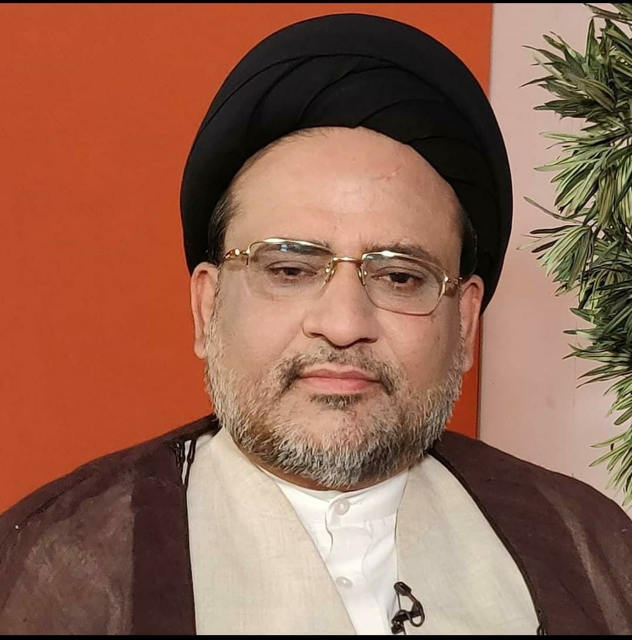
Maulana Aslam Rizvi, a prominent religious scholar and social leader based in Pune. With nearly three decades of dedicated service to the Shia community, Maulana Rizvi has been an educator, a mentor, and now serves as the President of the Shia Ulama Board of Maharashtra. His insights bridge centuries of Islamic tradition with contemporary social and political realities. In this conversation, we explore his personal journey, the essence of Shia Islam, the philosophy of Shahadat (martyrdom), and his perspectives on global events shaping the Muslim world today.
Q: Maulana Sahab, to begin, could you please tell us a bit about your background and your journey in Pune?
Ans: My name is Aslam Rizvi. I have called Pune my home for the past 29 years. Throughout this time, my life has been dedicated to the religious and social welfare of the Shia community, serving people across all age groups. For 14 years, I served as an educator at the largest Shia center in the city.
I eventually chose to transition from that role to make space for the next generation. In our institutions, we believe that once a person reaches a level of seniority, they should step back to allow “juniors” to lead and grow. Since then, I have focused my efforts on Seva (social service) and currently serve as the President Shia Ulama Board of Maharashtra.
Originally, my roots are in Varanasi (Banaras), Uttar Pradesh. My family has a long tradition of public service; my father was a high-ranking government official in the Pension Department, and my grandfather held a respected position in the police force. My maternal uncle also served in the Air Force. Beyond that, our family history is intertwined with India’s struggle for independence; I was raised with the knowledge that our ancestors were revolutionaries who made significant sacrifices for the nation.
Q: For those who may not be familiar, could you explain the Shia sect of Islam and what distinguishes it?
Ans: While Islam has various schools of thought, the two primary branches are Shia and Sunni. It is important to note that nearly 95% of our core beliefs are identical. We share the same fundamental pillars:
- Monotheism: Belief in the Oneness of God (Allah).
- Prophethood: Recognition of Muhammad as the final Messenger.
- The Quran: We follow the exact same Holy Book, without a single variation in text.
- The Qibla: We pray in the same direction toward the Kaaba in Mecca.
The primary distinction emerged regarding the succession of leadership after the Prophet Muhammad. Shias believe that Imam Ali the Prophet’s cousin and son-in-law was the rightful successor. We follow a lineage of twelve Imams; we believe the twelfth, Imam al-Mahdi, is currently in occultation and will return to establish universal peace and justice. This concept of a future era of truth is similar to the Hindu belief in Satya Yuga following Kali Yuga.
In modern times, our community is guided by highly learned scholars known as Ayatollahs. Much like the Pope in Christianity or the Shankaracharyas in Hinduism, these scholars interpret faith for the modern world. They address contemporary issues such as IVF or religious practice during air travel that did not exist 1,400 years ago, bridging the gap between ancient scripture and modern life.
Q: How has the concept of Shahadat (Martyrdom) been revolutionized by Imam Khomeini, and how do you see its impact today?
Ans: The essence of Shahadat is simple yet profound: Never bow before tyranny. It is a moral commitment to stand against injustice, even at the cost of one’s life. This spirit originates from the sacrifice of Imam Husain ibn Ali at the Battle of Karbala. His refusal to surrender to the tyrant Yazid has inspired figures ranging from Mahatma Gandhi to Nelson Mandela.
Imam Khomeini revived this dormant spirit during the Iranian Revolution. He taught that true dignity requires the courage to resist oppression. This “Karbala Paradigm” shifted the community’s mindset from passive mourning to active social and political responsibility. Today, that impact is seen in the resilience of people who refuse to be intimidated by external aggression. It is a message that transcends religion it is about human dignity.
Q: How are Shia clerics and the general community in India viewing the current tensions involving the US, Israel, and Iran?
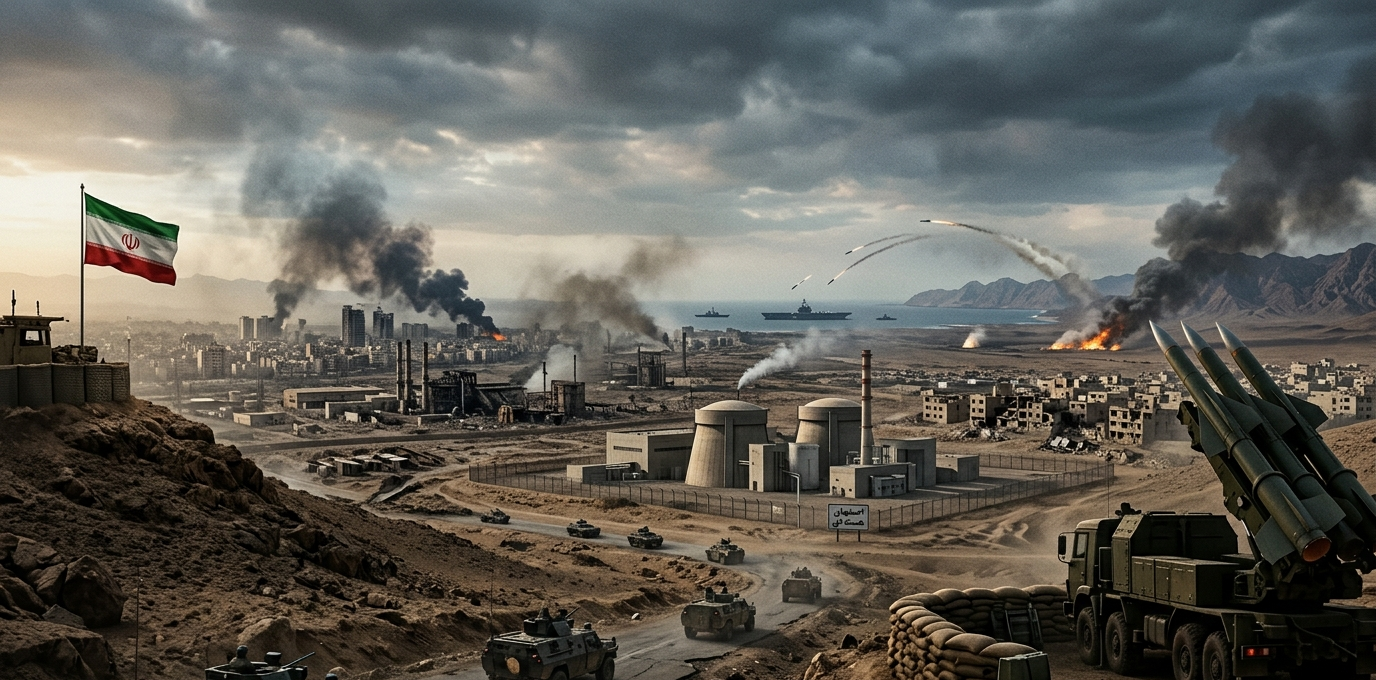
Ans: This isn’t just a Shia concern; I receive calls from Hindus and Sunnis alike who are deeply troubled. Throughout India, we have seen protests, not necessarily out of political alignment with a foreign state, but out of a shared religious and moral bond.
The sentiment is one of opposing what is perceived as blatant oppression. There is a feeling of a double standard: if an Asian nation were to target leaders and civilians in this manner, they would be labeled “terrorists” by the global community. But when it is done by a Western power, it is often framed differently. People in India are praying for an end to the violence and for the protection of the oppressed.
Q: There is much discussion about Mojtaba Khamenei as a potential successor in Iran. Some critics suggest this promotes a “dynasty.” What is your view?
Ans: First, it is important to clarify that the Iranian system is not a hereditary monarchy. The Supreme Leader is chosen by the Assembly of Experts, a body of 88 senior clerics, based on merit. When Imam Khomeini passed away, his son did not succeed him; instead, Ali Khamenei was chosen for his qualifications. A historical example helps explain this principle. When Ruhollah Khomeini passed away in 1989, his son Ahmad Khomeini was alive. If leadership were based purely on family lineage, Ahmad Khomeini might have become the leader. However, the council instead selected Ali Khamenei because they considered him more suitable and qualified for the position.
Regarding Mojtaba Khamenei, he is a deeply learned scholar who has taught Dars-e-Kharij (the highest level of Islamic jurisprudence) for 17 years, where discussion and arguments is the mode of education. While there may be individuals with more “academic” years, this position requires more than just book knowledge but wisdom which is essential in these challenging times.
A leader must manage both religious and worldly affairs. For instance, when Ayatollah Khamenei refused to even receive a letter from a US President via a Japanese envoy, it wasn’t a lack of education it was a strategic display of dignity and wisdom. You cannot run a nation on emotions or pure theory; you need a leader who understands the global chessboard.
Q: Finally, how do the two centers of Shia authority Najaf (Iraq) and Qom (Iran)—differ, and whom do Indian Shias follow?
Ans: There is no difference in fundamental belief; the “rivalry” between Iraq and Iran is often an external narrative designed to create division. The primary difference is structural.
In the Shia world, we have two roles:
- Marja-e-Taqlid: A senior jurist (like Ayatollah Sistani in Iraq) who provides guidance on personal religious practices prayer, fasting, and daily life.
- Wali-e-Faqih: A jurist (like Ayatollah Khamenei in Iran) who holds both religious and political authority to govern a society.
In India, the vast majority of Shias follow Ayatollah Ali al-Sistani for personal religious rulings (Fatwas). However, many also hold deep respect for the Wali-e-Faqih regarding broader political or collective issues of the global Muslim community. One provides the spiritual blueprint, while the other provides a model for socio-political governance.
Maulana Rizvi’s reflections remind us that faith, history, and social responsibility are deeply intertwined. From the lessons of Karbala to navigating contemporary challenges in India and abroad, his guidance emphasizes dignity, justice, and resilience. By understanding the nuanced roles of spiritual and political leadership, as well as the principles guiding the Shia community, we gain a richer perspective on the values that continue to shape society. ForPol thanks Maulana Rizvi for sharing his experiences and insights with us, offering a rare glimpse into the intersection of faith, scholarship, and civic responsibility.