




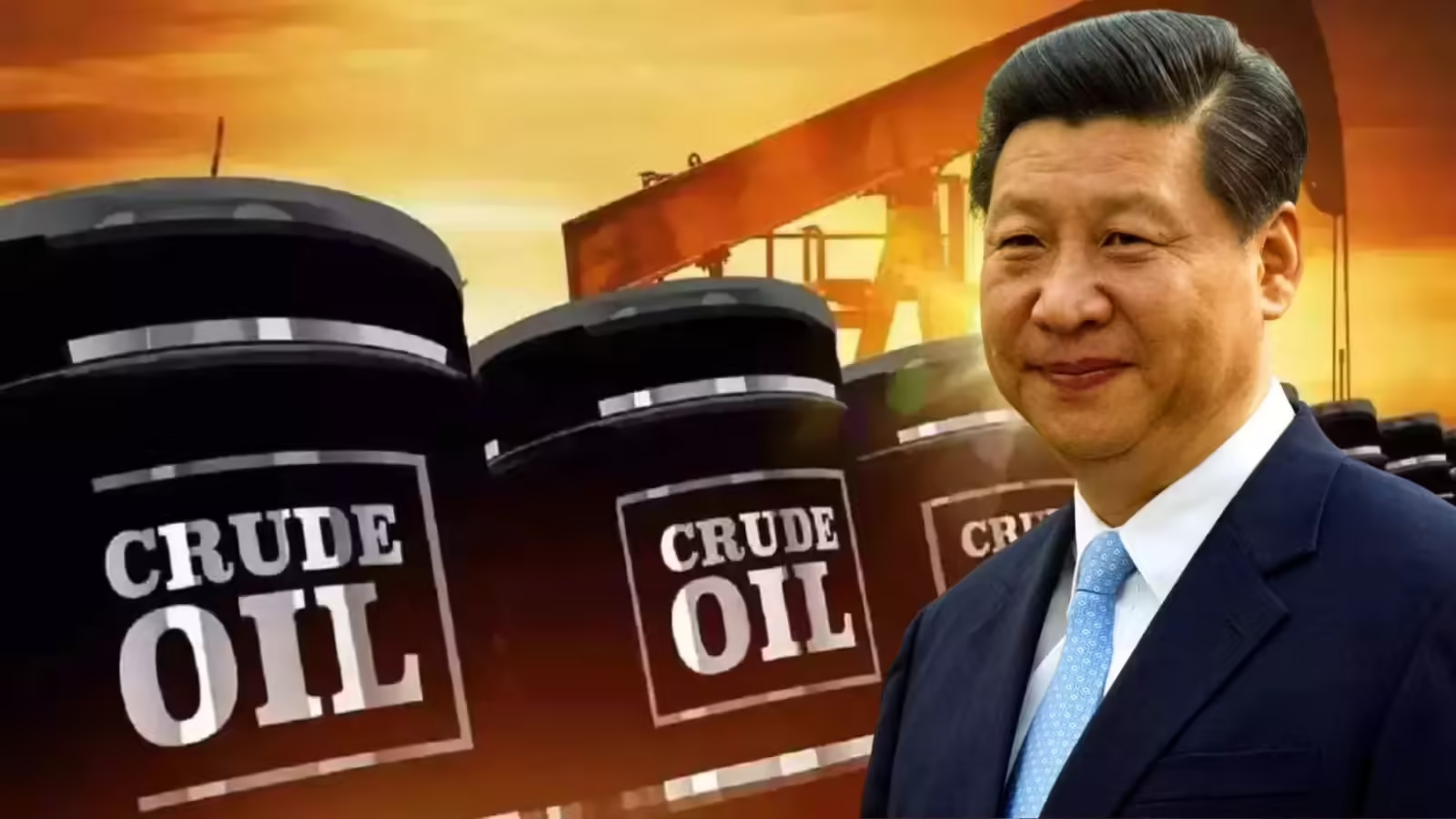
While New Delhi is grappling with anxiety over the fuel crisis, China, which governs a similar number of people, looks calm and prepared for the energy crisis. Ever since the war in the Middle East flared up with the attack by the US and Israel on Iran and the subsequent response of the regime by blocking the Strait of Hormuz, energy has become the focal point of the world.
The energy crisis is touching the shores of India, with more than 50% of Indian oil transit happening through the strait. However, there is no immediate shortage of energy supply for India, but there is a huge panic spreading across the nation. The government is also now hinting that the situation is a matter of concern. While India’s panic over the energy crisis is making headlines, the neighbouring country China remains calm and composed.
The Malacca Dilemma
With China’s growth engine taking off from the 1990s, the Chinese economy started importing huge quantities of crude oil from overseas. China realised that 80% of its oil imports pass through a choke point called the “Strait of Malacca,” and Chinese President Hu Jintao in 2003 coined the term “The Malacca Dilemma” and started formulating a policy to overcome the energy crisis in the event of any naval blockade.
This fear forced Beijing to invest in the Myanmar pipeline to transport energy from the Bay of Bengal to the southern province of China, which started operating from 2013 and reduced dependence on transit through the Malacca Strait.
Although India does not have any choke points like Malacca, India should also start diversifying its crude oil transit by rapidly pushing for projects like the South Asian Gas Enterprise (SAGE). SAGE is an underwater transnational gas pipeline project connecting India and the Middle East, bypassing sensitive regions like the Strait of Hormuz, and provides uninterrupted supply of energy to India during blockades.
Expansion of storage
Beijing’s another major step to counter the Malacca dilemma was to invest in strategic petroleum reserves to hold the crude oil. Currently, China is holding reserves estimated between 1.1 to 1.4 billion barrels, which could provide import cover of roughly 110-140 days. This is well above the international benchmark for energy security set by the International Energy Agency. India, on the other hand, has a total national storage capacity, including commercial stocks, of 74 days. Indian Strategic Petroleum Reserve Limited, a public sector company, maintains capacity for 9.5 days but is currently holding only about 64% of that (around 5 days effective). Indian refiners hold the rest. But this is still below the benchmark set by the IEA. The Indian government has currently approved the expansion of two more crude oil storages, which could provide another 10 to 15 more days of lasting storage and help India achieve 90 days of storage. The Indian government also proposed in 2020 to store the fuel in the US reserves, and the government should re-explore this option, which could further expand and diversify the storage.
Penetration of EV
In 2025, new energy vehicles, including EVs, accounted for roughly 48% of all new car sales in China, and the momentum continues strongly into 2026. This signals the penetration of EVs in the Chinese automobile market and is reducing dependency on crude oil. This was largely possible because China produces the vast majority of the world’s lithium battery cells. Indian EV penetration still faces significant challenges, such as dependency on lithium battery imports. India has untapped lithium reserves in J&K, which can give a huge boost to the Indian EV sector and reduce dependency on crude oil. But the G2 stage of exploration is only now completing (targeted for early 2026), and previous auction attempts have seen limited success. However, India needs to further deepen collaboration and speed up work with Lithium Triangle countries like Argentina, Bolivia, and Chile, which could provide access to the critical mineral.
Finally, China’s pragmatism and foresight have made the country insulated from the energy crisis today, while India does not lag much behind but still needs to take steps in the right direction to expand and diversify our resources to avert any crisis in the future.
Written By – Mahesh Rallabhandi
Mahesh Rallabhandi is a software engineer who follows international relations, diplomacy and national issues. He tweets at @lordmatrixx19.