



For much of the twentieth century, education in India carried a near-sacred promise. A degree was not merely a certificate. It was understood as a contract with the future. Study diligently, accumulate credentials, and the market would reciprocate with stability, dignity, and income. In West Bengal, this belief acquired cultural depth. Education became entwined with social respectability and moral worth. The figure of the educated person, articulate and historically grounded, stood at the centre of the state’s self-image.
By 2026, that contract appears strained. Not because education has lost intrinsic value, but because the assumption that it automatically translates into economic reward has grown increasingly fragile. The difficulty lies in the conflation of learning with labour-market entitlement.
The Expansion of Higher Education and the Rise of Credentialism
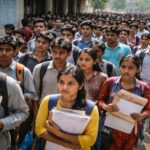
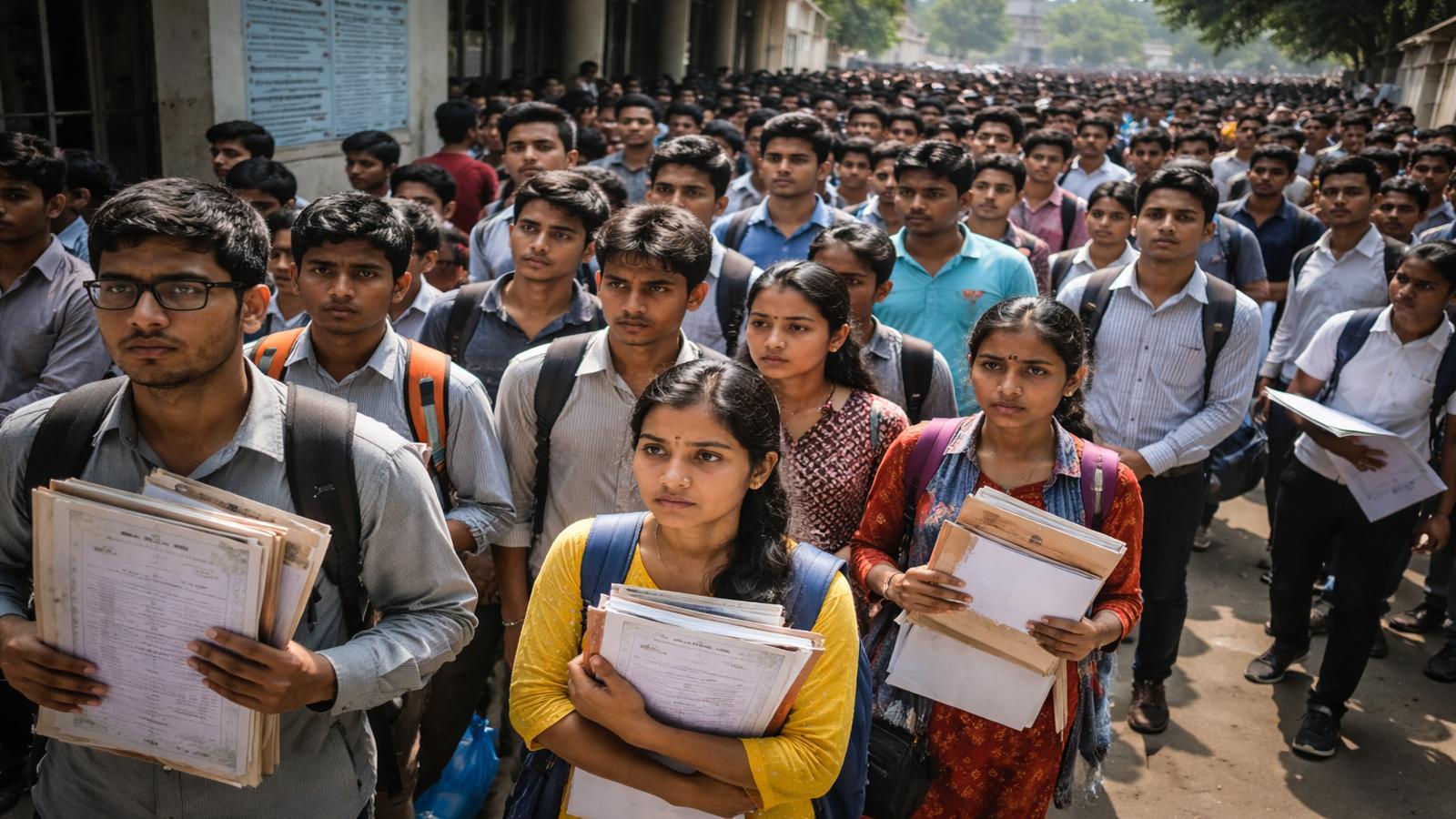
India’s Gross Enrolment Ratio in higher education has risen from about 23 percent in 2014-15 to nearly 28 percent in 2021-22, according to the All India Survey on Higher Education. In absolute terms, this means tens of millions of students are enrolled across universities and colleges. West Bengal alone has more than one million students enrolled in higher education institutions.
This expansion represents an undeniable achievement. Access has broadened across class and gender lines. Yet, as sociologists of education have long argued, the mass expansion of degrees can also produce credential inflation. When a bachelor’s degree becomes commonplace, employers often treat it as a baseline requirement rather than a mark of distinction. Postgraduate qualifications then become the new differentiator, regardless of whether the economy has expanded proportionately to absorb them.
In West Bengal, the cultural prestige of academic attainment remains high. However, labour markets do not reward prestige. They reward productivity, adaptability, and alignment with demand. When curricula remain largely theory-heavy and examination-oriented, graduates may possess substantive knowledge that is intellectually sound but not easily convertible into income.
The Statistical Paradox of Employment
Recent Periodic Labour Force Survey data offers a revealing contrast. For the July to September 2025 quarter, West Bengal’s unemployment rate under the Current Weekly Status measure stood at around 3.7 percent for persons aged 15 and above. At first glance, this does not suggest a crisis.
Yet this figure must be interpreted carefully. First, unemployment does not capture underemployment. A postgraduate working in a low-wage informal role is not technically unemployed. Second, labour force participation in many states remains uneven, particularly among women, which influences the overall unemployment calculation. Third, many educated youth spend extended periods preparing for competitive examinations. During such time, they may not always be counted as unemployed in conventional surveys.
West Bengal’s own policy responses reflect awareness of deeper strain. In the 2026-27 state budget, the government announced a major allocation of approximately ₹5,000 crore for Banglar Yuba-Sathi, a scheme offering ₹1,500 per month to eligible unemployed youth between 21 and 40 years of age who have passed at least Madhyamik. The scale of fiscal commitment signals that the problem is structural rather than anecdotal. If unemployment were marginal, such targeted support would not command this level of expenditure.
Economic Structure and Limited Absorption
West Bengal’s economic composition adds another layer to the issue. According to state-level economic surveys and NITI Aayog analyses, a significant share of the workforce remains concentrated in agriculture and low to mid-tier services. Manufacturing contributes a smaller proportion relative to certain industrialised states.
High-value sectors capable of absorbing large numbers of postgraduates in humanities and general sciences have not expanded at a commensurate rate. At the same time, West Bengal has historically been a substantial contributor to inter-state migrant labour. Census-based estimates indicate that over 16 lakh workers from the state were recorded as inter-state migrants in search of employment in the previous decade. While the composition of this migrant population varies, the broader pattern of outward movement underscores limited local absorption capacity.
Even within the education system, signals of saturation are visible. Reports in recent academic admission cycles have pointed to large numbers of vacant undergraduate seats in state-run and aided colleges. This suggests that students and families are beginning to reassess the perceived economic returns of certain degree pathways.
Curriculum, Time Lag, and Market Evolution
The global economy of 2026 is shaped by automation, digital platforms, artificial intelligence, and fluid project-based work. Employers increasingly value demonstrable skill sets, portfolio evidence, and familiarity with contemporary tools. By contrast, many undergraduate and postgraduate programmes across India remain anchored in pedagogical frameworks designed decades earlier.
This temporal lag does not invalidate academic disciplines. A Master’s degree in History or Political Science retains intellectual legitimacy. However, its market value depends on how effectively it is combined with applied competencies. Research translation, data literacy, policy analysis, digital communication, archival management, and pedagogical certification can transform disciplinary knowledge into economically viable output. Without such integration, graduates often discover that the market does not price their credentials at the level they were led to expect.
The result is a widening perception gap. Families equate degrees with upward mobility. Employers evaluate candidates on immediate contribution.
Psychological and Social Consequences
In West Bengal, where intellectual life historically shaped public culture, this gap has emotional consequences. When formal education does not yield commensurate income, frustration takes on moral overtones. Individuals may feel that their effort has not been reciprocated by the system.
This often produces extended exam preparation cycles, reluctance to enter roles perceived as misaligned with one’s qualifications, and further accumulation of degrees in the hope of differentiation. Each additional credential, however, yields diminishing returns if the demand side of the economy remains constrained. Over time, the educated class can experience a paradoxical marginalisation. It retains symbolic capital but lacks economic security.
Re-framing the Social Contract
A more coherent approach requires decoupling education from automatic economic liberation. Education is a public good. It cultivates analytical reasoning, ethical awareness, historical understanding, and civic participation. These contributions are not reducible to salary. Employment, by contrast, is governed by supply, demand, and structural conditions. It requires alignment with prevailing economic needs and continuous skill adaptation.
When society insists that education must guarantee prosperity, it risks discrediting learning itself if wages fail to match expectation. Conversely, reducing education to narrow vocational training impoverishes intellectual and civic life.
West Bengal’s experience illustrates the urgency of clarity. The expansion of higher education has been real. The expansion of high-productivity employment has been slower. Bridging this gap demands institutional reform, greater integration between disciplinary study and applied skill development, and greater honesty in communicating placement realities to students.
The market does not allocate income as a reward for academic effort. It compensates value creation within existing economic frameworks. Recognising this distinction does not diminish education. It protects it from misplaced expectation and allows for a more sustainable alignment between knowledge and livelihood. In that recognition lies the possibility of restoring credibility to both learning and work in contemporary Bengal.