



As tensions surrounding Iran continue to escalate, questions are emerging about the potential role of non-state actors and ethnic insurgencies in shaping the trajectory of a wider regional conflict. Among the most discussed possibilities is whether Kurdish armed groups in Iran’s western provinces could be encouraged to open a ground front against Tehran. At the same time, smaller insurgent networks in Iran’s Sistan-Baluchistan region are also drawing attention from analysts assessing potential pressure points within the Iranian state.
To better understand the strategic calculations behind these developments, ForPol spoke with Manish Rai, a geopolitical analyst who closely tracks Kurdish movements and insurgent dynamics across West Asia. In this conversation, Rai discusses the emerging Kurdish political alignment in Iranian Kurdistan (Rojhelat), the cautious approach Kurdish leadership is adopting toward Washington and Tel Aviv, the implications for Turkey and Syria, and the limited but notable role that Baloch insurgent groups may play in the evolving security environment inside Iran.
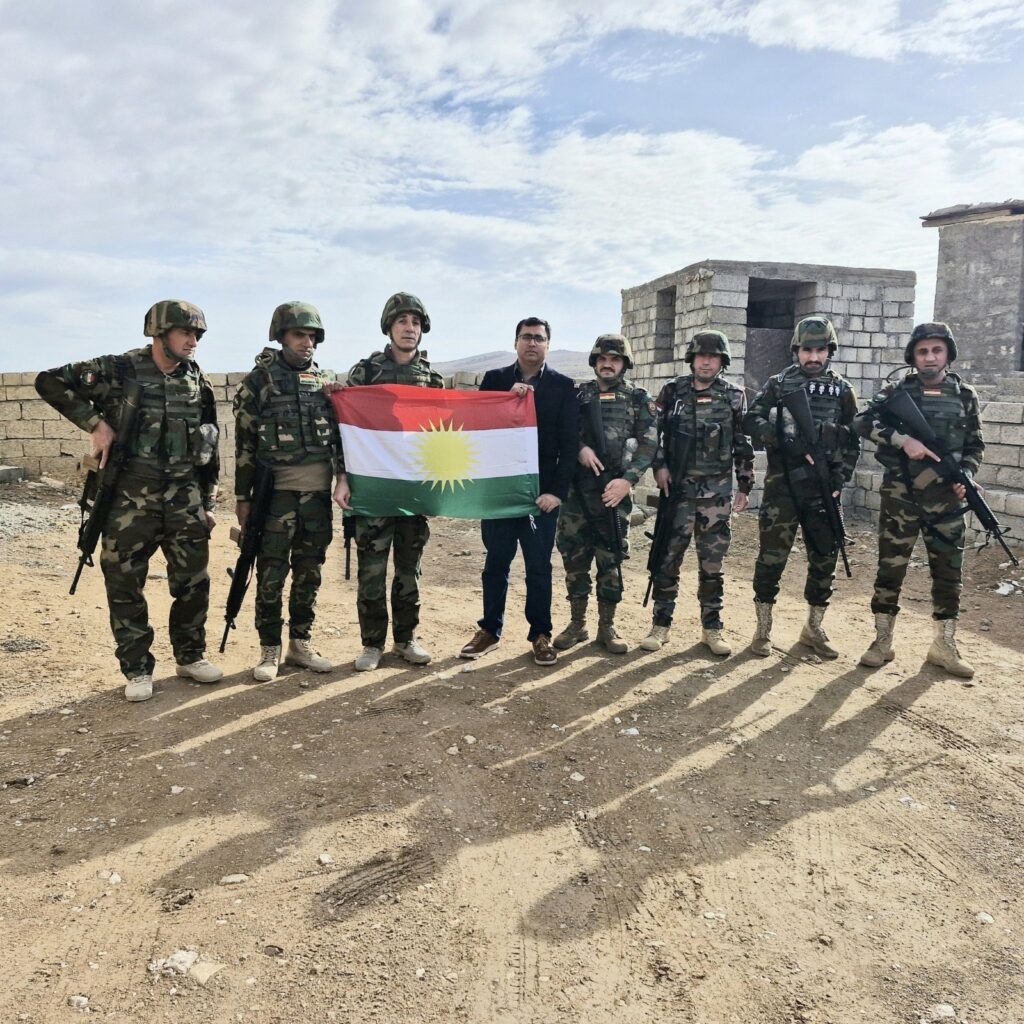
1. Why do you think US, Israel are encouraging Kurds to join the fight against Iran?
Manish Rai: Israel and the United States have acknowledged that regime change in Iran cannot be accomplished without the deployment of ground forces. Iran is a hazard for ground invasion due to its vast size and population, as well as its formidable armed forces. Iranians can engage any invading foreign ground force of any size for an indefinite period. Additionally, there are other obstacles, such as logistics and non-cooperation from Iran’s neighbors. That is why the United States and Israel are presently developing an alternative strategy to pursue Kurdish armed groups that operate in Iranian-Kurdistan (Rojhelat) in order to establish a front against the Iranian regime.
2. Which all Kurdish groups have accepted to fight against as differing reports are coming?
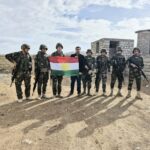
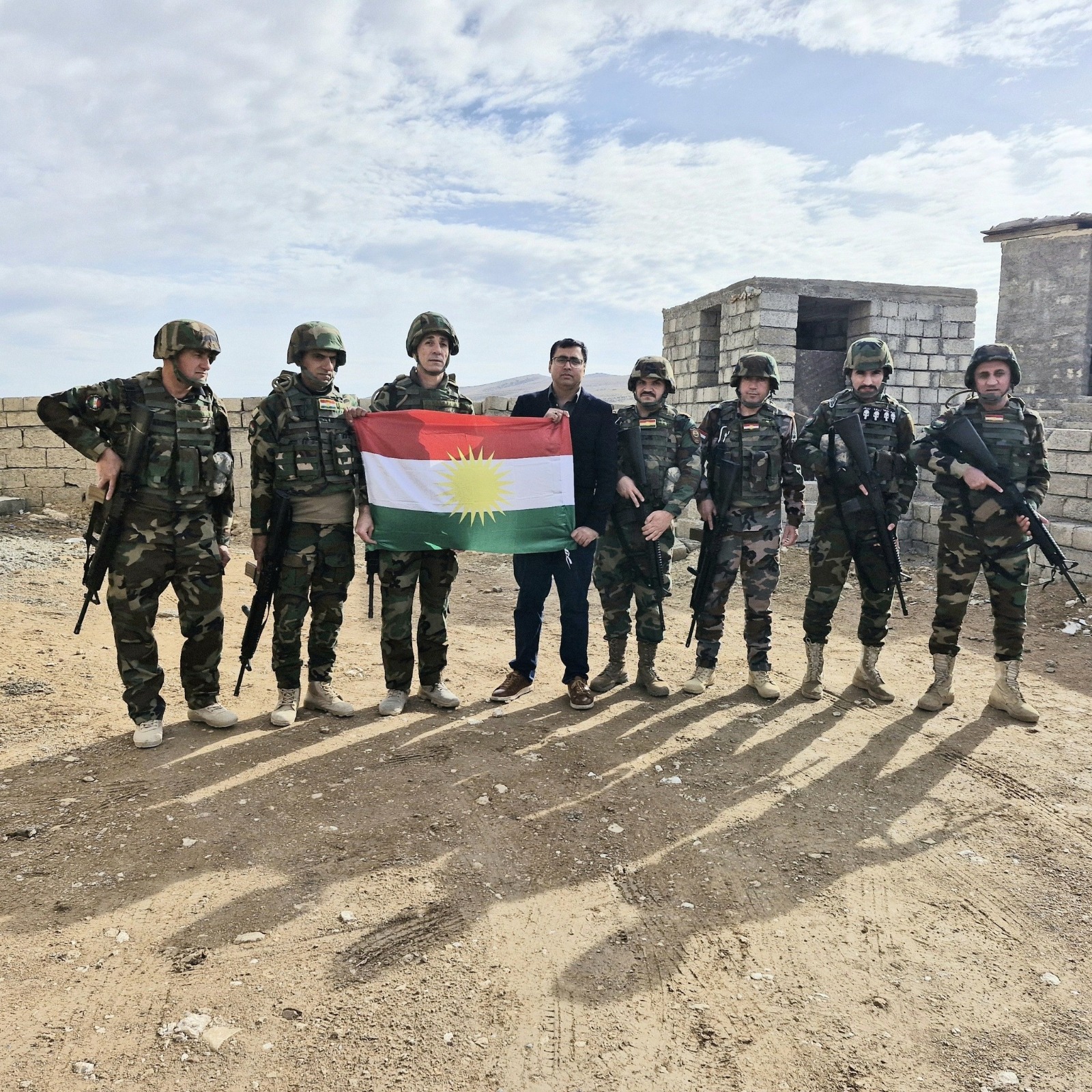
Manish Rai: As of now, no Kurdish group has officially confirmed its intention to establish a ground front against Iranian forces. However, just a few weeks prior to the commencement of US-Israeli operations against Iran, the United Kurdish Front (UKF) was established as a result of the announcement by main Kurdish armed groups in Rojhelat to combine their forces and form a unified front against the Iranian regime. The Kurdistan Democratic Party of Iran (KDPI), Kurdistan Free Life Party (PJAK), Kurdistan Freedom Party (PAK), Komala Party of Kurdistan (Reza Kaabi group), and Khabat Organization of Iranian Kurdistan are among the primary parties that are participating in this front. It is believed that the United States and Israel have bestowed their benediction upon this united front. In the event that a ground front is established against the Iranians in Rojhelat, these factions will be the most likely candidates.
3. Do you think Kurds should believe in US especially after the Syria episode?
Manish Rai: There is undoubtedly a trust deficit among the Kurdish populace as a whole in relation to the United States following the invasion of Rojava by the Syrian interim government’s forces. This is the reason why no Kurdish groups have verified their participation in the US-Israeli war against Iran to date. Kurds are somewhat sceptical and require some concrete guarantees prior to participating in the conflict. There is a rumour that the Kurds are not interested in participating in a transactional alliance; rather, they desire long-term support from the United States. Presently, the Kurdish leadership in Rojhelat is grappling with the question of what their status should be in the event of regime collapse: an autonomous region within Iran or outright independence.
4. Do you think is this a trap for Kurds, as Iran has already bombed few Kurdish areas, and ultimately this weaken them further?
Manish Rai: The US and Israel have offered it to the Kurds, who are now considering it. Kurds are politically mature and will not make any rash decisions; they have acquired knowledge from their past errors. Iran’s targeting of Kurdish territory, particularly Iraqi-Kurdistan, is a clear message to Kurdish leadership to refrain from participating in the current conflict, or else they will be held accountable. The Kurdish political leadership in both Rojhelat and Iraqi Kurdistan (Bashur) are currently deliberating whether it is in their best interest to take a stance in this conflict or to remain neutral.
5. How is Turkey and Syria looking at the whole equation, as recently PKK has disarmed itself and in Syria space has shrunken for Kurds. Will it reignite Kurds or will further damage them which in turn will benefit Turkey and Syria?
Manish Rai: The Syrian regime is not a significant player in this conflict, and Kurdish groups from Syria also have a limited role. However, the Turkish government is closely monitoring the activities of Kurdish groups in Iran, particularly in light of the potential for these groups to gain influence and pose a threat to Turkey’s national security. The Kurds desire assurances that the United States and Israel will provide protection in the event of a future Turkish attack, as Turkey is opposed to any Kurdish entity being strengthened near its borders. The Kurds are adept at negotiating, as they are aware that if they supported the United States and Israel in this conflict and attempted to establish a Kurdish entity, they would be targeted by both the Turks and the Iranians for their actions.
6. Has PFF or JMM from Sistan-Baluchistan also being roped by US? If yes, how will this work considering major group Jaysh Al Adl is designated by US?
Manish Rai: The same initiative was initiated in the Balochistan-Sistan province of Iran. In December 2025, several significant Baloch groups opposed to the Iranian central regime proclaimed a merger. Jaysh e-Adl spokesperson Mohammad Baloch has announced that several groups, including Jaysh e-Adl, PADA Baloch Movement, Nasr-e-Balochistan, and the Mohammad Rasulullah group, which is led by Haji Vahed Bakhsh, are uniting to establish an umbrella organization known as the Popular Fighters Front (PFF). The purpose of the PFF is to consolidate the resistance against the Iranian regime. However, the Baloch insurgency in Iran is significantly less than the Kurdish insurgency. Despite their nuisance value, Baloch organizations are unable to present a significant threat to Iranian security forces due to their insufficient numbers, which limits their operational capacity and influence compared to larger insurgent groups like the Kurds. Consequently, the United States and Israel did not pay them much heed.
7. How are Iranian Baluch looking at war in Iran?
Manish Rai: Currently, they are observing this conflict and anticipating the appropriate moment to initiate a resurgent Baloch insurgency. They will initiate bold attacks on Iranian forces and attempt to establish territorial control in certain regions of Balochistan-Sistan province if they conclude that the Iranian regime is on the brink of collapse or is significantly weakened.
The evolving strategic landscape around Iran highlights a familiar pattern in Middle Eastern geopolitics: external powers often look to internal fault lines to exert pressure on rival states. Yet, as this conversation illustrates, Kurdish and Baloch actors are far from passive instruments in such calculations. Their decisions are shaped by historical experience, regional rivalries, and a clear awareness of the risks involved in aligning with external powers during moments of geopolitical confrontation.
For Kurdish leadership in particular, the dilemma is profound. While moments of regional upheaval have historically created opportunities for Kurdish political aspirations, they have also repeatedly exposed Kurdish communities to retaliation from surrounding states. As a result, any decision to openly participate in a conflict against Tehran will likely depend on assurances of long-term strategic backing rather than short-term tactical cooperation.
In the coming months, the choices made by Kurdish and Baloch actors inside Iran may reveal whether internal insurgencies become a meaningful pressure point against Tehran or remain cautious observers of a conflict whose outcome remains uncertain. Either way, their calculations will continue to shape an already complex geopolitical equation in West Asia.
Manish Rai is a geopolitical analyst and columnist for the Middle East and Af-Pak region. He has done reporting from Jordon, Iran, Iraqu-Kurdisran, Yemen and Afghanistan. His work has been quoted in the British Parliament. He is also a author of book titled “Peshmerga: A Amazing Journey from Guerrilla to Soldier”. This book has received multiple awards including one from Kurdistan Regional Government (KRG)