







The Baloch do not belong only to Balochistan. They have lived in India for centuries, spread across several regions from the northern states to Maharashtra. Their arrival in Maharashtra is relatively recent, dating back to the early 20th century, when the British were developing Bombay (Mumbai) and required a large labour force to cut through mountains and lay roads and railway tracks, Baloch were brought in from Balochistan and played critical role in development of the city we know today. Today, the Baloch in Maharashtra are largely concentrated in Mumbai and Akkalkuwa.
Over time, the community has become an inseparable part of Mumbai – its economy, its politics, its culture, and even its entertainment industry. Many prominent figures in Hindi cinema have Baloch roots, including Raj Kumar, Kader Khan, Suresh Oberoi, and the noted filmmaker Mehul Kumar (Mohammad Baloch), known for films such as Tiranga, Krantiveer, Kohram etc.. In the action and stunt department too, the Baloch have carved a distinctive space, and for one family, this craft has become a generational legacy.

What appears on screen as sudden destruction – a car spiralling out of control, metal twisting on impact, glass scattering through the air is never accidental. It is the result of meticulous planning, where even chaos must follow instruction. The illusion of disorder rests upon invisible discipline.
When cinema requires catastrophe, it turns to the choreography of metal, momentum, and engineered failure. For the Baloch stunt lineage, this craft is not merely a profession but an inheritance.
Their journey into cinema did not begin on a film set. It began generations earlier in physically demanding labour. According to family accounts, their ancestors arrived in India during the British era to work on the railway lines being laid across Bombay. They were engaged in stone-breaking extracting, shaping, and supplying stone for the tracks between Borivali and Andheri. This work demanded endurance, precision, and an intimate understanding of material and balance.
From this mechanical familiarity emerged a new livelihood. As quarry work became unstable, the family moved into the buying and selling of automobiles. Vehicles were no longer distant machines; they became objects to dismantle, modify, reinforce, and rebuild. When film productions required cars often imported models capable of surviving high-impact collisions—the family began supplying them. Supply gradually turned into participation, and by the 1950s the family had formally entered the world of cinematic stunts.
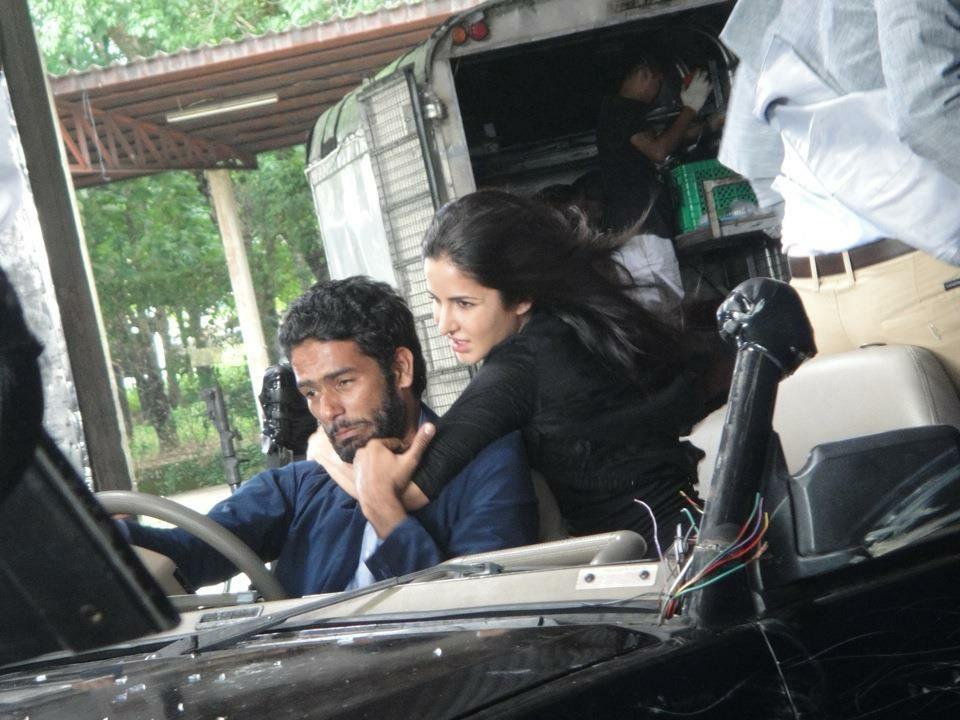
The earliest professional foundation of this transition can be traced to their grandfather, Abdul Wahid Baloch, who worked extensively with filmmaker Ashok Roy in an era when no formal stunt union existed. Among the films remembered within the family archive is Chakkar Pe Chakkar, representative of a time when vehicular action depended as much on instinct as on precision. That generation established credibility when safety systems were minimal and technical infrastructure was still evolving.
Today, the craft continues through multiple active members of the family.
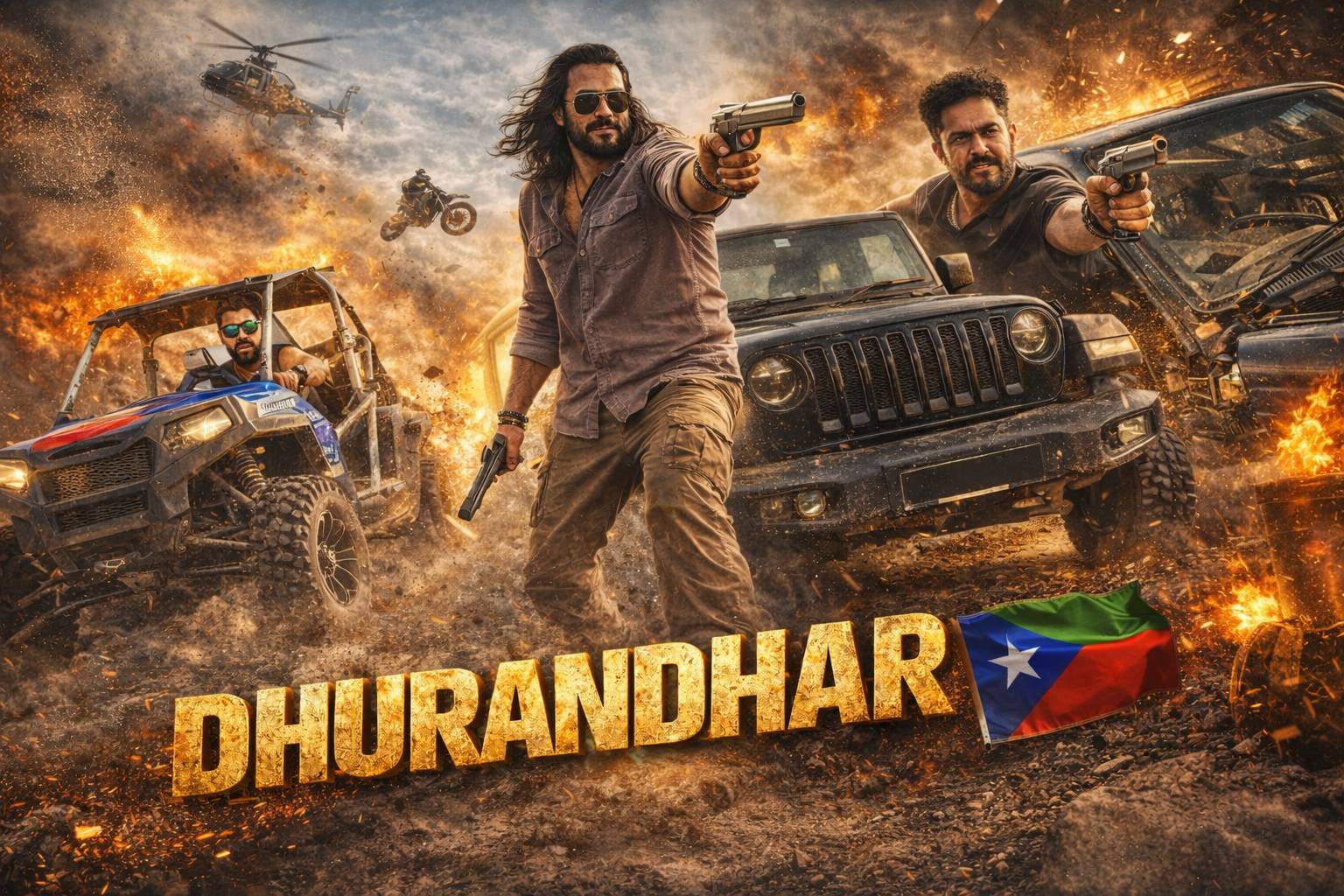
Zeeshan Baloch, with nearly fourteen years of experience, identifies primarily as a car stunt specialist. Having executed fifty-five car flips and worked in more than forty-five films, he describes his profession as intensely calibrated and physically demanding. In the film Dhurandhar, he and fellow family members Arif Baloch, Imran Baloch, and Saeed Baloch performed a complex chase involving four police vehicles pursuing Ranveer Singh on a motorcycle one of the film’s standout sequences. His other major projects include War and Udta Punjab, along with advanced car drifting for a Thumbs Up commercial.
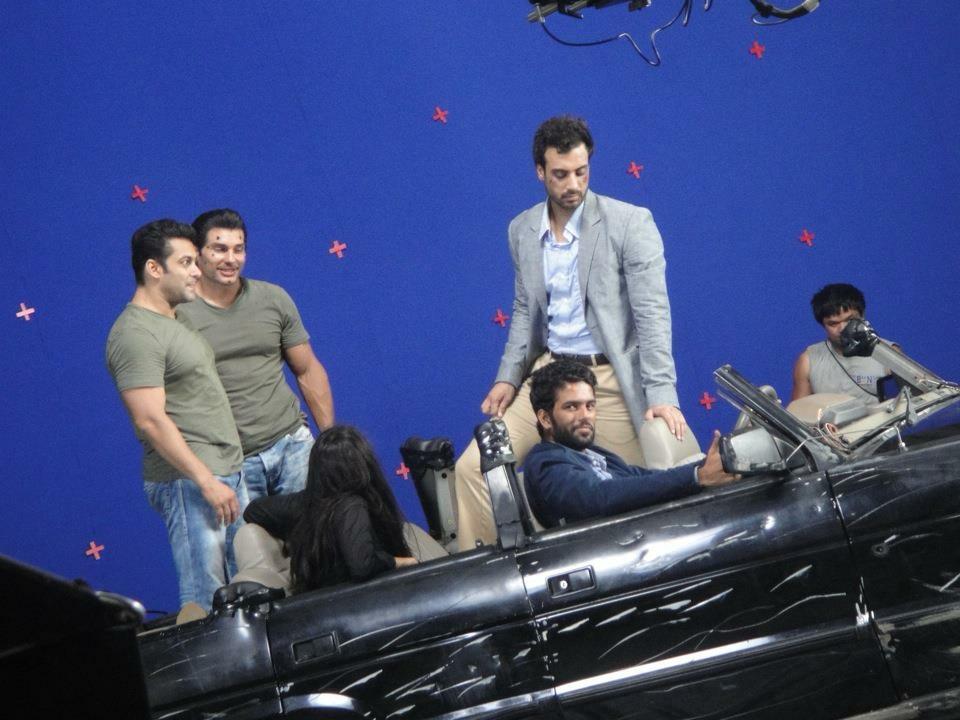
Raees Baloch, officially a stuntman since 2008 and raised within the profession, specializes in vehicular stunts – car rolls, flips, jumps, crash impacts, gear-based manoeuvres, and run-and-roll sequences. His work includes Ek Tha Tiger, Bang Bang, Mardaani, Border etc. a major Ajith Kumar project featuring a dramatic car jump, and a current project for Shah Rukh Khan’s King.
The family’s contribution extends beyond performance. They modify vehicles for cinematic impact like reinforcing chassis, recalibrating balance, and engineering controlled structural failure. His father, Abid Baloch, once an active stunt performer, now focuses primarily on vehicle modification for films and other projects.
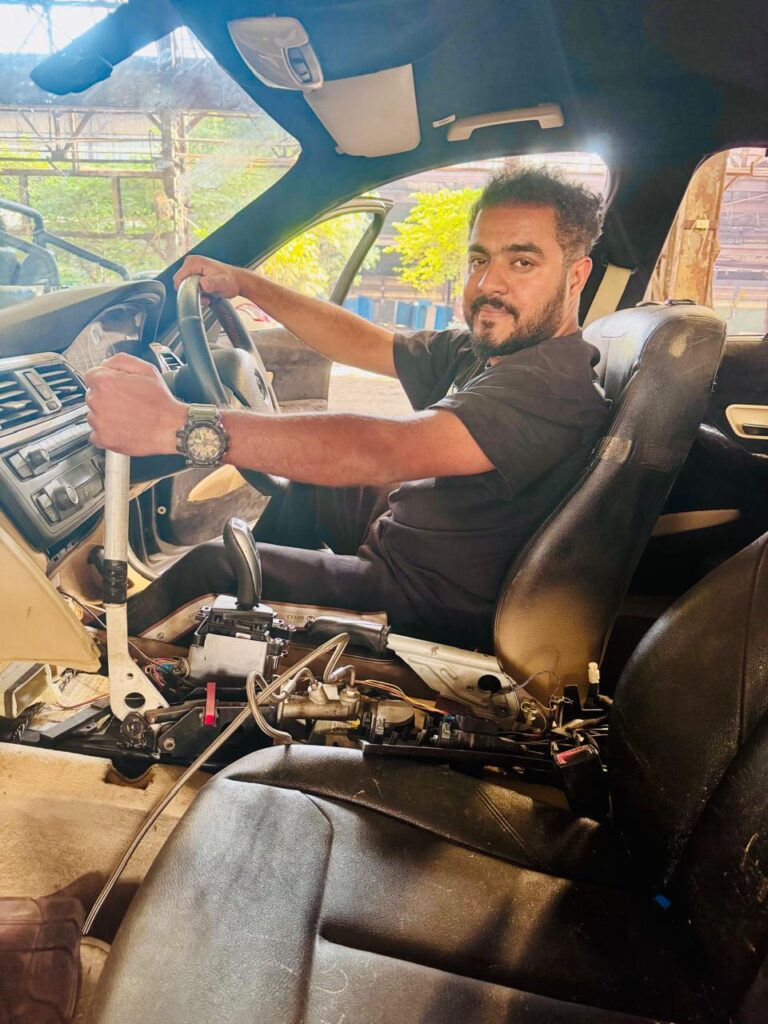
With over fifteen years of experience and more than one hundred projects across films, documentaries, and web series, Saeed Baloch continues this specialization. His work includes Pathaan, Jawan, The Family Man, and Dhurandhar, where he performed the principal car chase sequences. In The Family Man, the majority of vehicular stunts were executed by him and his uncle Arif Baloch, while his father Abid Baloch performed a memorable sequence in the first season in which Abid overturns a police van.
Because Dhurandhar featured Baloch characters and cultural elements, the family also advised the production team on costume design, styling, and the traditional turban (paggadi), ensuring authenticity in representation.
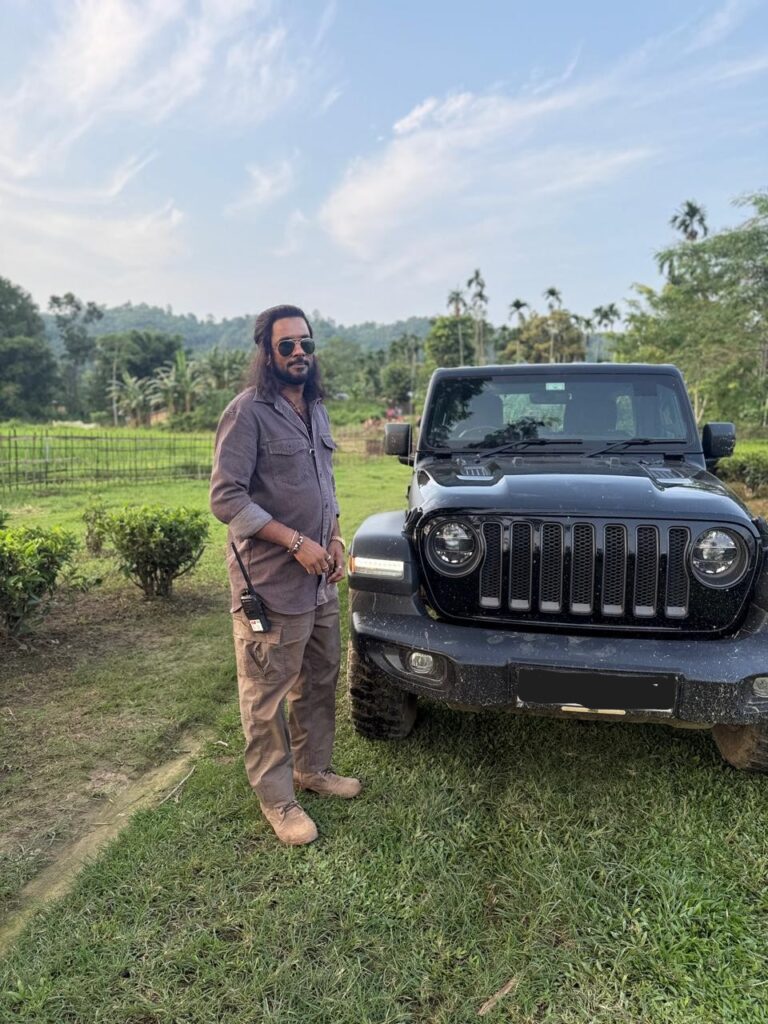
The family belongs to the Rind Baloch tribe, originally from Quetta, yet they identify strongly as Indian Baloch, with roots in Mumbai dating back to the pre-independence period. Their story from stone-breaking during road-railway expansion to designing high-budget cinematic action represents a continuous arc of adaptation and mastery.
In recent years, this sense of identity has found renewed public expression through the growing observance of Baloch Cultural Day, celebrated by Baloch communities across the world, including in India on 2 March. Marked by traditional dress, music, food, and the reaffirmation of shared history, the day reflects the same pride in heritage that families like theirs have carried quietly for generations.
In an industry built on spectacle, this stunt family embodies a striking paradox: the more chaotic the image, the more disciplined the design behind it. Their work transforms velocity into vocabulary and impact into intention. And in doing so, they reaffirm a truth that defines both their craft and their culture – excellence is never accidental. It is inherited, engineered, and performed with unwavering precision.